
Landscape Lighting Design
Where the trees sit in the plan, and what they are meant to do for the rest of the property.
Uplighting reveals the trunk, branching and canopy. Moonlighting turns the tree into the fixture and lays soft light and shadow across everything below it.
Large trees give a property height, depth and texture during the day, and hand all of it back at sunset unless they are lit.
A properly lit tree does more than become a focal point. It gives the eye somewhere to go beyond the house, makes a yard read as deeper than it is, and connects areas that would otherwise be islands of light with darkness between them.
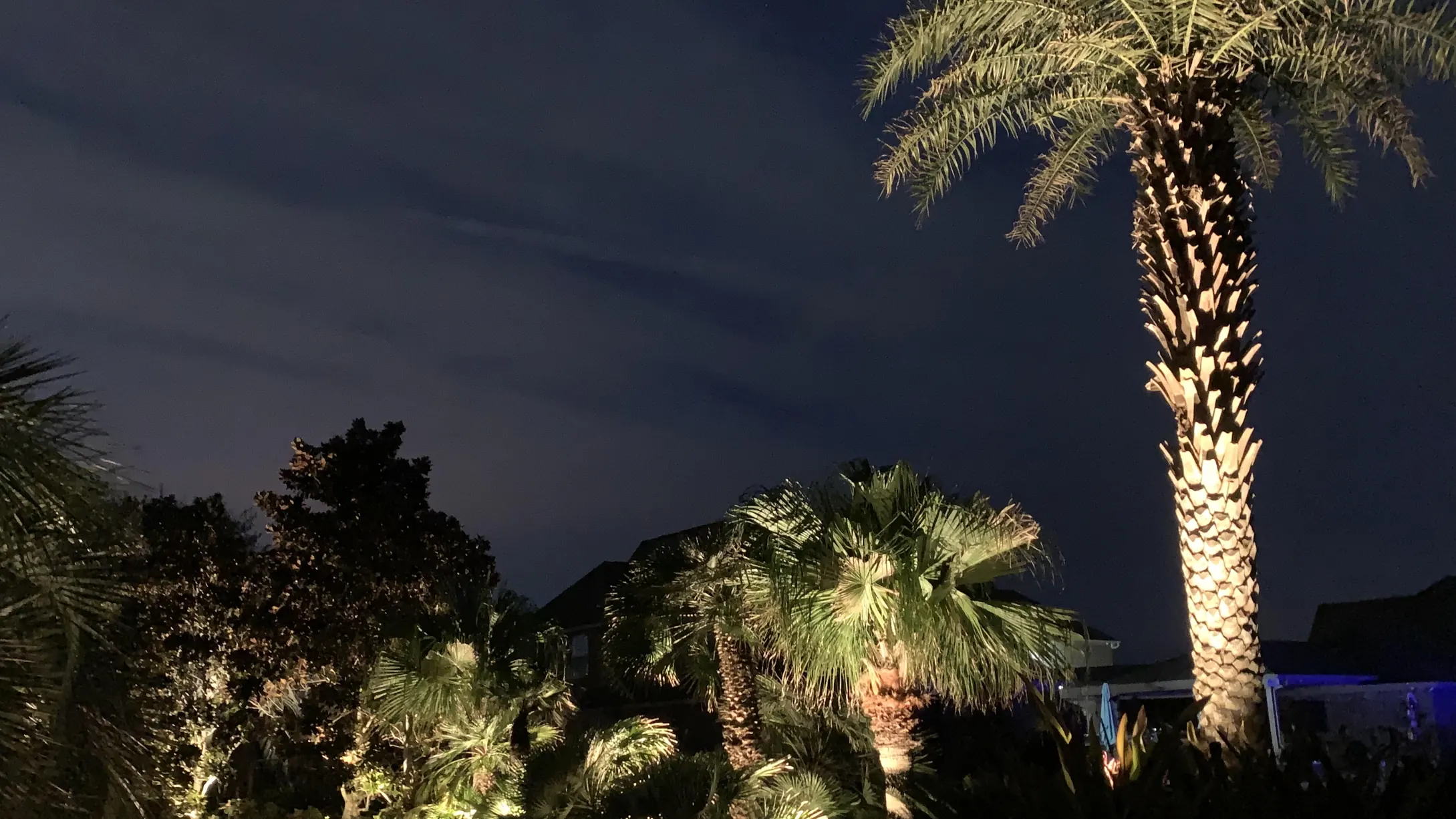
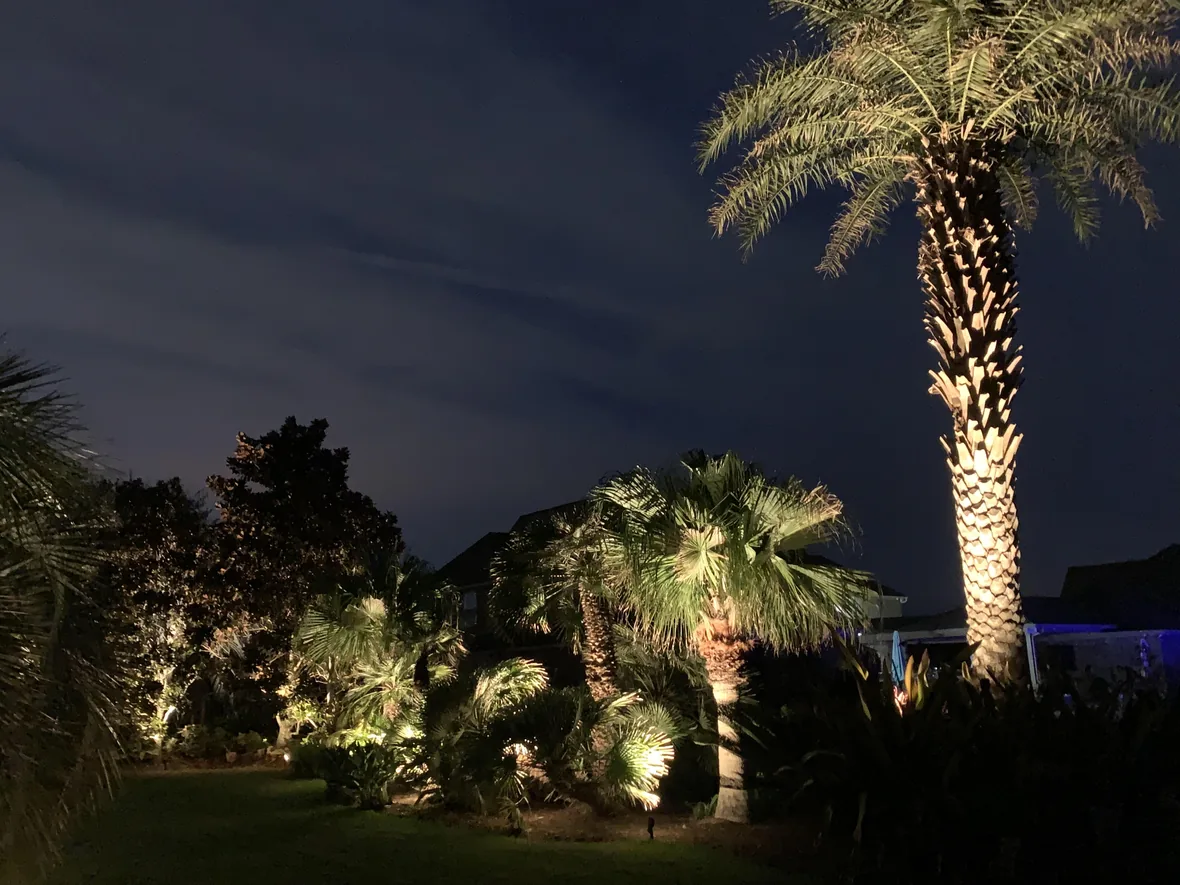
Fixtures near ground level aimed up into the tree. Depending on the specimen that may be one fixture or several at different angles: a broad oak usually needs more than one position to show the trunk, the branch structure and the canopy without flattening any of them.
A palm is a different problem entirely — a tall trunk and an elevated crown make a strong vertical, and the beam has to be tight enough to travel that far without washing the crown out.
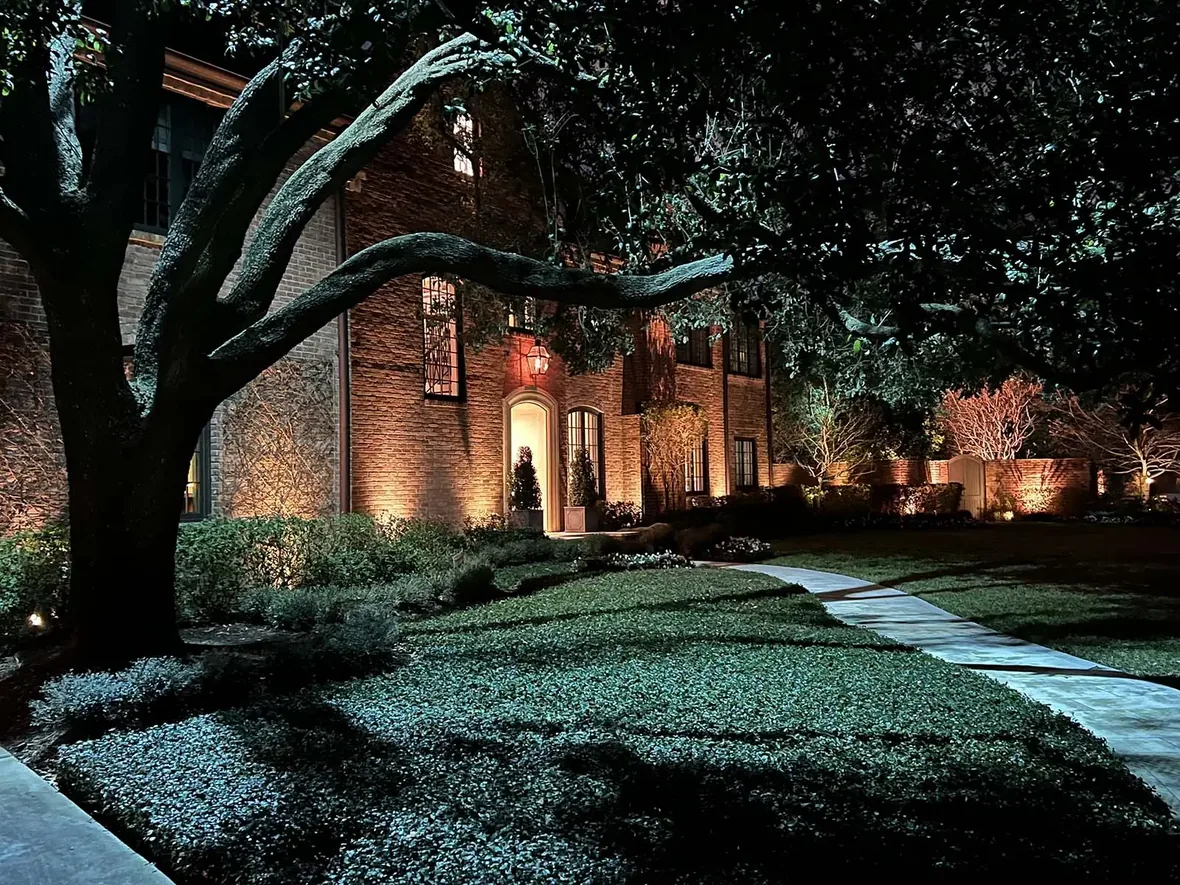
Fixtures are mounted high in a suitable mature tree and aimed down. The light passes through branches and leaves before it reaches the ground, so what lands on the lawn is soft, patterned and moving — closer to natural moonlight than to a landscape fixture.
Most techniques draw attention to the thing being lit. This one does the opposite: the source is invisible, the tree is doing the work, and a much larger area is covered than any ground fixture could manage.
Uplighting reveals the tree; moonlighting uses it to light everything underneath. On a mature specimen the two run together — the trunk and major branches lit softly from below, a separate fixture in the canopy laying light across the lawn or the walkway.
That is where the layers come from, and why a property with a few well-lit trees reads as finished while one with a lit facade alone does not.
If everything past the patio edge goes black, the yard ends at the patio edge. Light a tree at the far end and the same yard suddenly has a back wall much further away.
The same trick works around pools and along walkways: a canopy above a path gives moonlight to walk through, and a tree across the water doubles itself in the reflection.
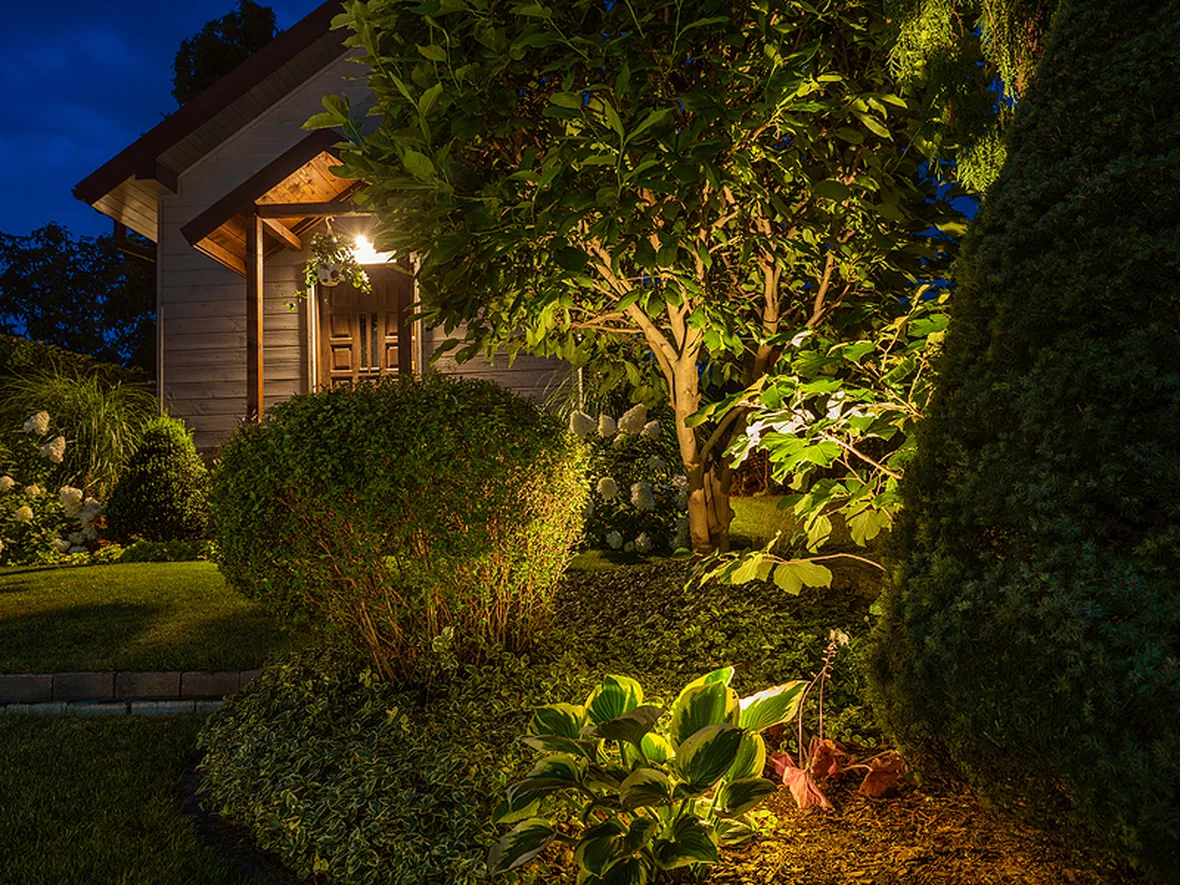
Branch shadow across a lawn is not a by-product, it is the effect. Which means fixture height, angle and the density of the canopy all get chosen deliberately — a light set too low throws hard shapes, one set too high inside a thick canopy never reaches the ground.
Canopy fixtures are mounted so the tree can keep growing: hardware that does not girdle the limb, cable routed and secured with slack, positions chosen where a crew can reach them again.
And trees do not stay the same. Canopies thicken, limbs are removed, a small ornamental becomes a large one. The aim that was right at installation needs revisiting — which is what maintenance visits are actually for.
Where the trees sit in the plan, and what they are meant to do for the rest of the property.
A lit tree beyond the seating area is what keeps a patio from feeling like a lit box.
Canopies over water: reflection doubles whatever you put above it.
Trees frame the house; the two sets of levels have to be decided together.
Canopy fixtures, cable management in a living tree, and the hardware that survives growth.
Trees grow. Aim drifts, canopies thicken, and fixtures need moving to keep the effect.
Fixtures near ground level aimed up into the tree, revealing the trunk, branch structure and canopy. A large tree usually needs more than one position.
Fixtures mounted high in a mature tree and aimed down through the branches, so the light reaching the ground is soft and patterned — the effect of natural moonlight.
They answer different questions. Uplighting makes the tree the feature; moonlighting uses the tree to light the landscape below. Many designs use both, sometimes on the same tree.
Installed properly, no. Hardware is chosen so it does not girdle the limb and cable is run with slack so the tree can keep growing.
Yes, and they need a different approach: a tall trunk and an elevated crown call for a tighter beam and a different fixture position than a spreading shade tree.
They make good focal points in gardens, courtyards and entrances — usually with lower output and a narrower beam than a mature specimen would take.
Yes. Canopies thicken and limbs get removed, so aim and sometimes fixture position need adjusting. That is part of ongoing maintenance.
Usually. We check transformer capacity and wire runs first, then add the positions the trees need. Landscape Lighting Installation
Most properties already own their best nighttime feature — it just disappears at sunset.