
Commercial Outdoor Lighting
The whole property: signs, entrances, walkways, landscaping, courtyards and gathering areas.
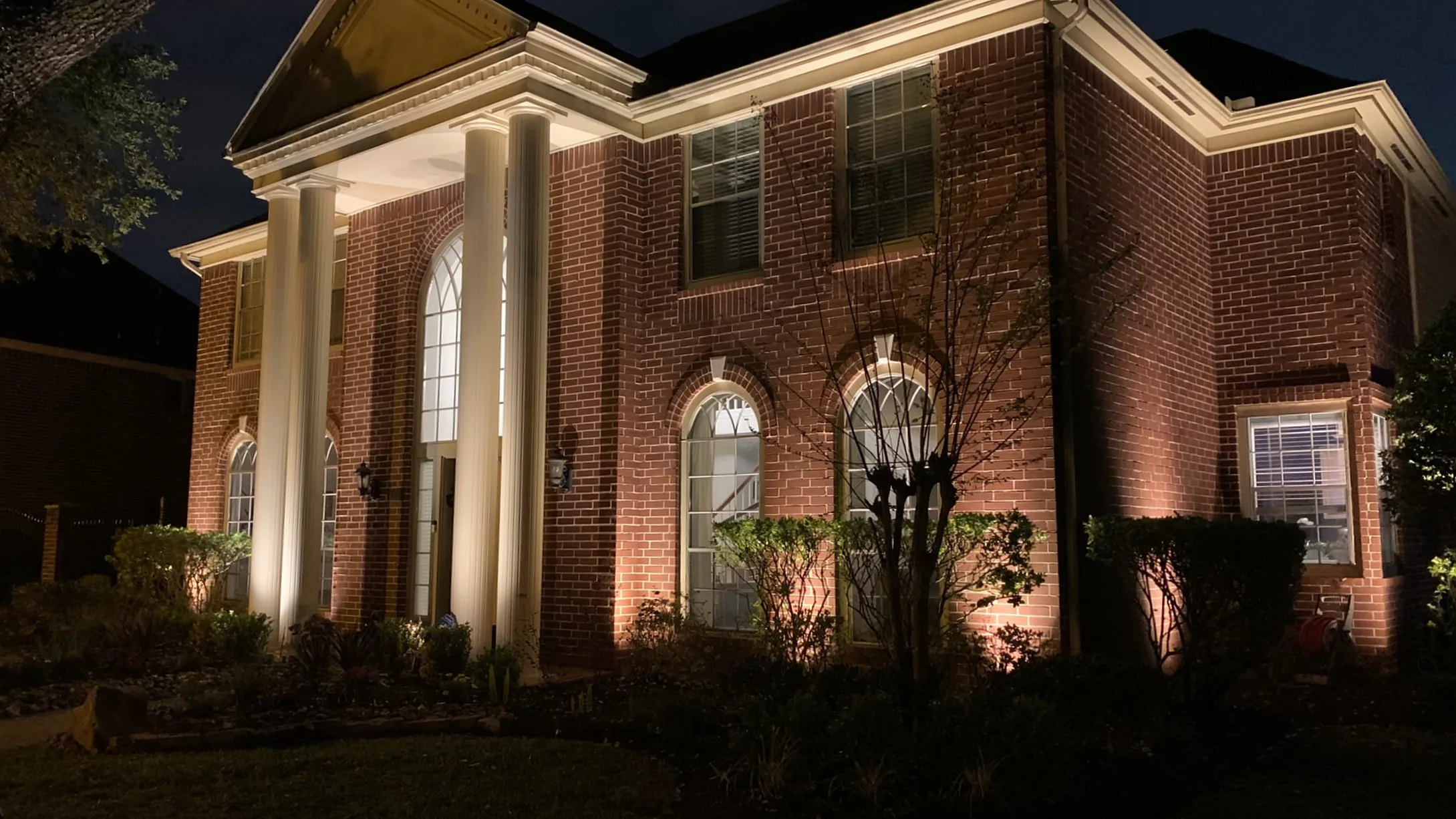
Facades, columns, stone, brick, panels, entrances and rooflines — lit so the architecture looks intentional at night rather than simply brighter.
A textured stone wall, smooth stucco, glass, brick and metal panels all behave differently under the same fixture. The material decides the technique, not the other way round.
Stone and brick reward grazing: a fixture close to the surface, light pushed across it, small shadows bringing out the texture. Smooth stucco and painted panels want the fixture further out and a wider beam, or every hot spot shows. Glass returns almost nothing, so what reads at night is the frame around it and whatever is lit inside.
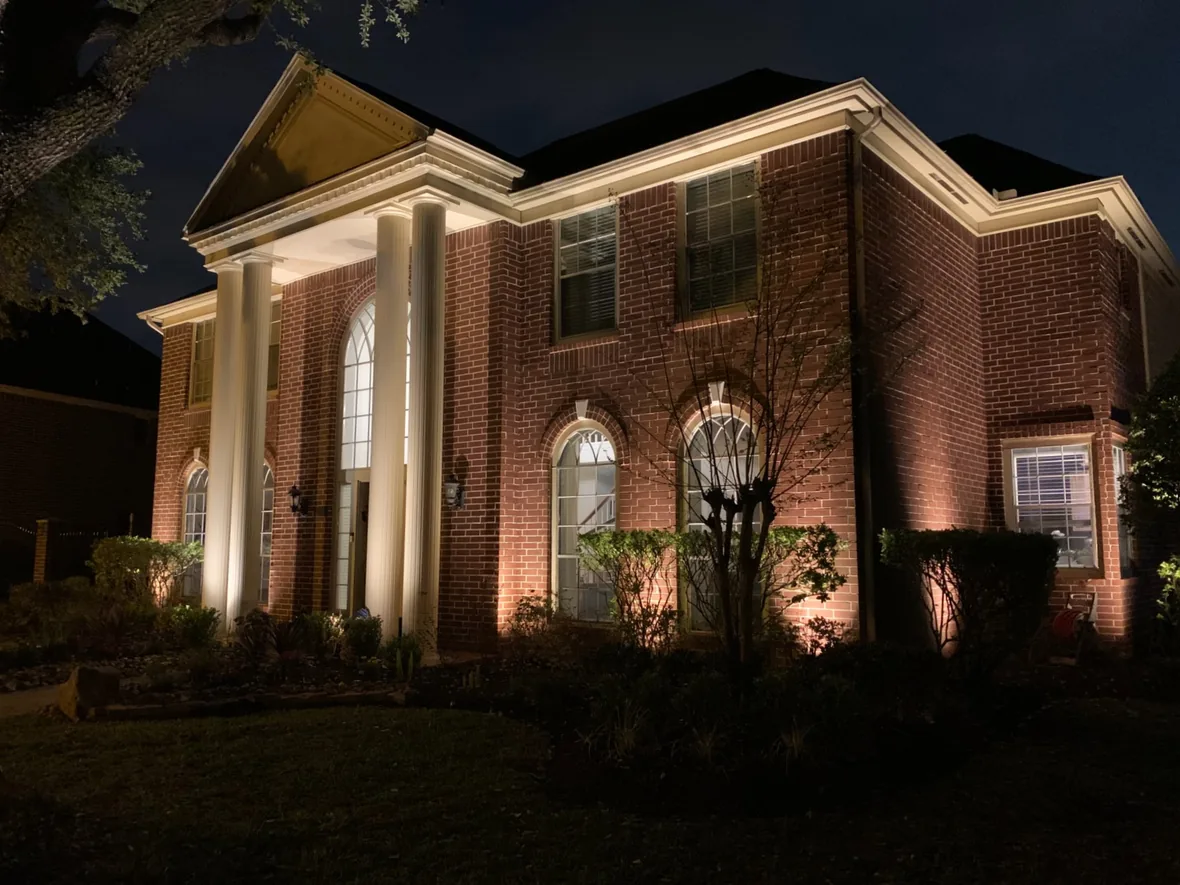
Lighting every square metre of a facade flattens it. The building reads better when a few elements carry it and the rest fall away:
Fixture position, beam direction, intensity and viewing angle decide the result. The aim is a building that looks considered after dark, not a building with its lights on.
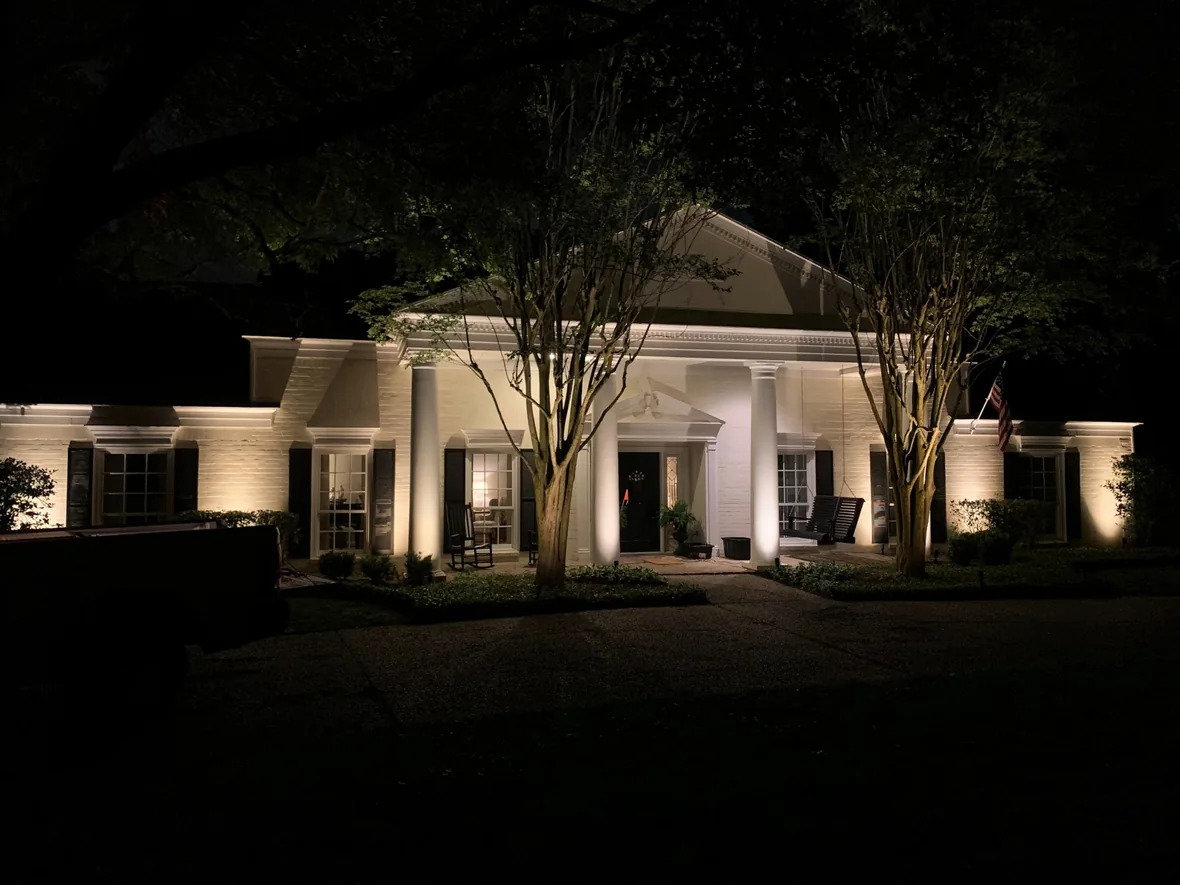
Can a visitor identify the building from the road? Does the entrance stand out from everything else on the elevation? Is the sign legible at the distance people actually read it from? Does the landscaping simply disappear at sunset?
Those questions have more to do with revenue than with lighting design, which is why the facade is usually where a commercial project starts.
Over-lit facades create glare for drivers and neighbours, flatten the architecture and cost more to run. The level that looks right is usually well below the level people expect, especially once the surrounding areas are dark.
Shielded fixtures, controlled beam spreads and aiming away from sightlines keep the light on the building instead of in someone's eyes — and keep the property from looking like a forecourt.
Commercial fixtures on a Houston property live through heat, humidity, heavy rain and the occasional storm surge of water across a forecourt. Fixture quality, mounting, sealed connections and wire routing decide whether a facade still looks right in five years.
The whole property: signs, entrances, walkways, landscaping, courtyards and gathering areas.
The same techniques on residential architecture — stone, columns, entries and rooflines.
Facade lighting works with the planting around it, not against it.
Schedules, zones and colour for a holiday or a brand moment, over a warm everyday setting.
Aim drifts, lenses dirty and planting grows — facade lighting shows it faster than anything else.
Older metal-halide and halogen facade lighting converted to LED without starting from scratch.
Architectural lighting placed on and around a building so its shape, materials and entrances read after dark, rather than area lighting that simply raises the light level.
It should not. The level that looks right is usually lower than people expect, and controlling glare matters as much as controlling brightness.
Yes — monument signs, building identification and address features are usually designed with the facade so the two are not fighting each other.
Yes. Most of the work happens outside business hours or around the areas in use, and the night-time review is after dark anyway.
Often. Older metal-halide and halogen fixtures can frequently be converted or replaced while keeping the existing wiring and positions. LED Upgrades & Retrofitting
Yes, with colour-changing fixtures on suitable elements. We keep the everyday setting warm and use colour as an event setting. Smart & Color-Changing
No. High-voltage parking-lot and roadway lighting is a different electrical scope — send us the details and we will say whether the project is something we do.
We do, on the same terms as residential work: cleaning, re-aiming, voltage checks and repairs. Maintenance & Repair
We walk the property after dark, look at the approach, the entrance and the surfaces, and show you what the architecture can actually do at night.