
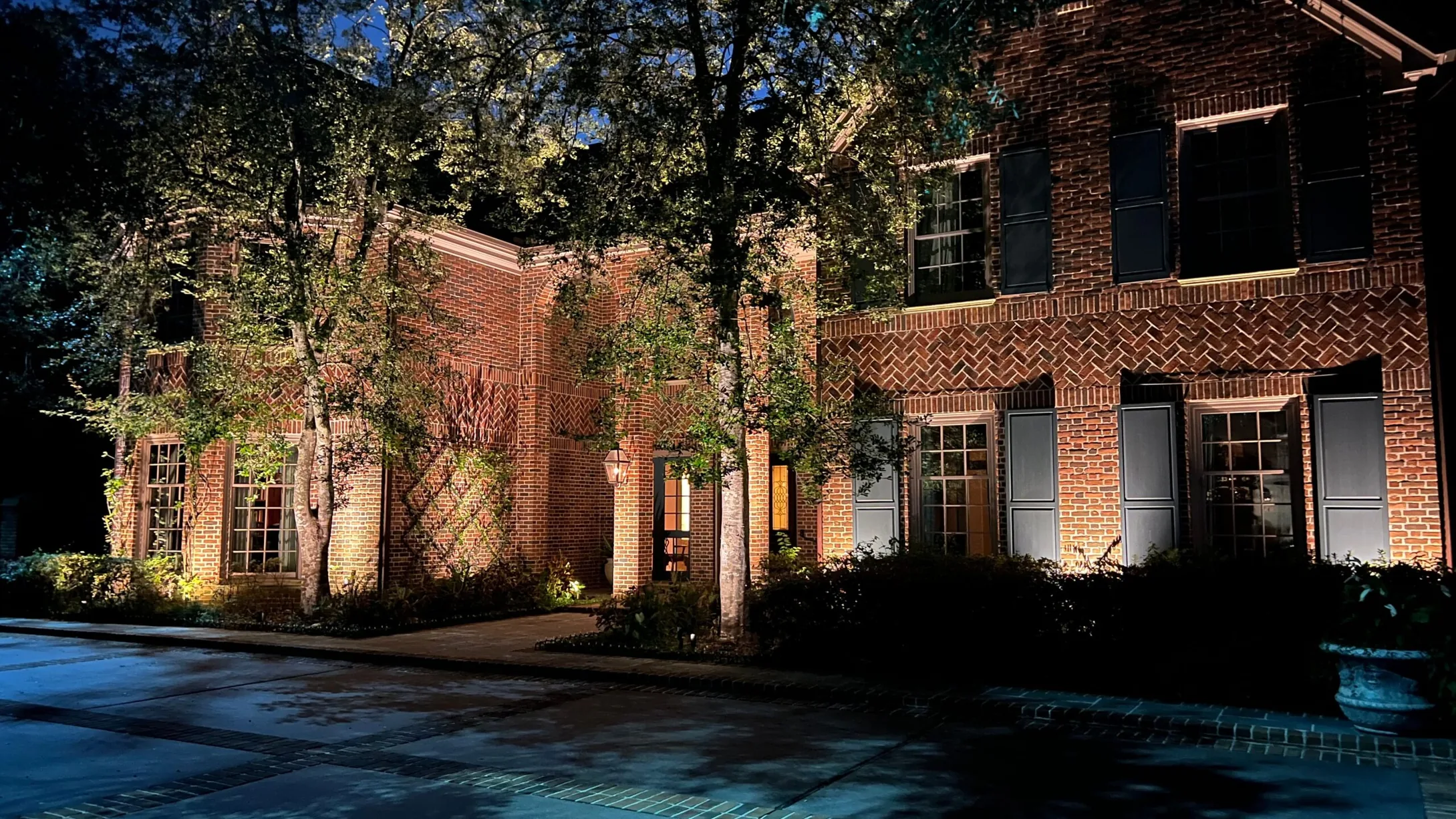
Outdoor Lighting Repair
When the system is failing rather than simply dated, the repair comes first.
Halogen to LED, fixture by fixture where it makes sense. We evaluate what you already have — fixtures, wire, transformer, controls — before anything gets replaced.
A retrofit converts an existing low-voltage system to LED using as much of what is already in the ground as the condition of it allows.
Some fixtures accept a compatible LED lamp and carry on. Others — corroded housings, failed seals, plastic that has gone brittle in the Houston sun — have reached the end regardless of what lamp goes in them. The wire, the transformer and the controls each get the same judgement.
Solid brass fixtures in good condition are usually worth keeping — that is the point of brass. Sockets, seals and lenses decide it more than age does.
Fixtures that should go are the ones that have already failed once, the ones whose housings no longer seal, and the ones aimed at something that stopped mattering years ago. Replacing those is not an upsell; it is the part of the system that would fail again first.
LED draws a fraction of the load halogen did, which changes the arithmetic on everything behind the fixtures. A transformer that was at its limit may now have room for another zone. Runs that were dropping voltage at the far end may come back into range.
It cuts both ways: wire that was marginal for halogen can be perfectly adequate afterwards, while wire that was nicked, corroded or spliced badly is still a fault waiting to happen.
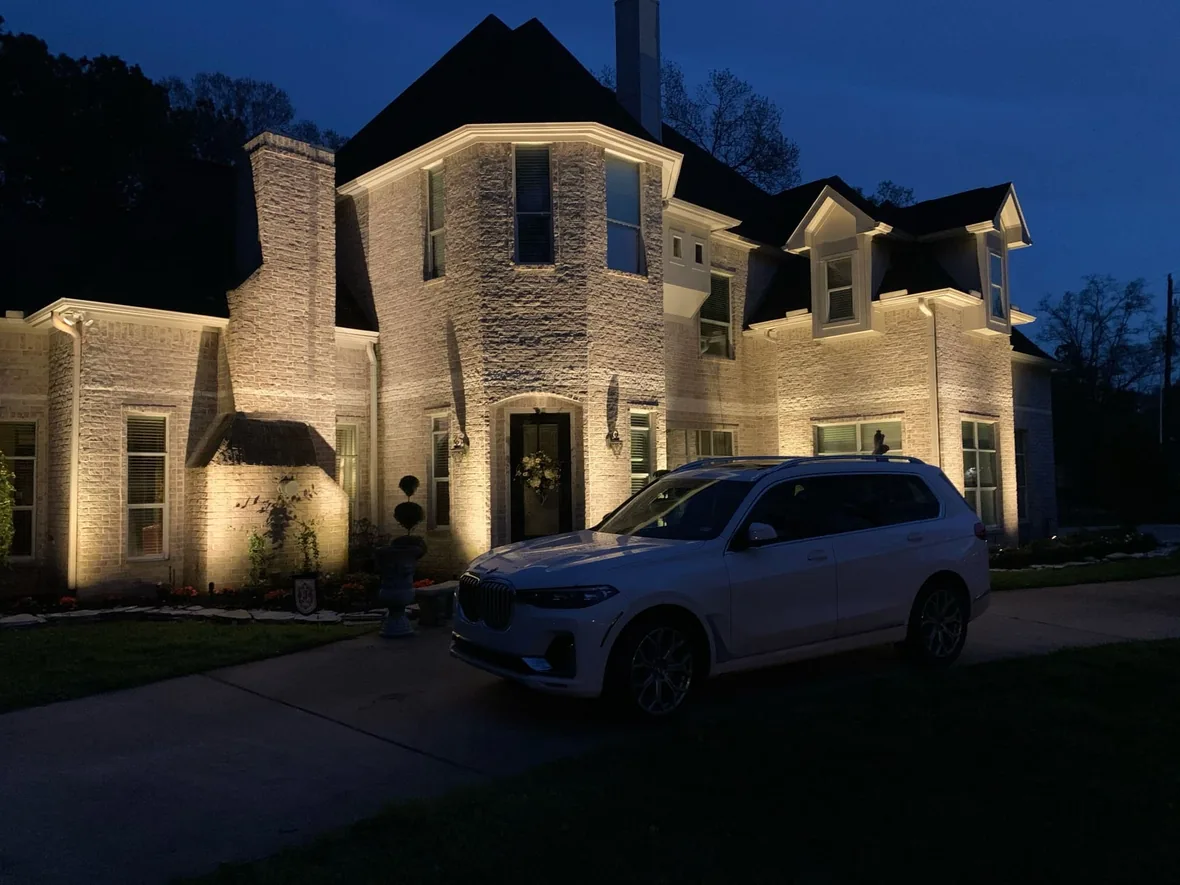
The reason people distrust LED outdoors is a decade of cold, blue-white fixtures. We use warm white around 2700K for residential work, which reads much closer to the halogen it replaces.
Consistency matters as much as temperature. A property with three generations of lamps in it looks wrong even when every fixture is working, so a retrofit is also when the colour across the property gets brought back into line.
Swapping a lamp changes more than the colour. LED lamps come in different beam spreads and outputs, and a narrow beam in a fixture that used to throw wide will put a stripe up a wall instead of washing it.
Matching output and spread to what each fixture is actually lighting is the difference between a retrofit that looks like the original design and one that looks like a lamp change.
Zones, dimming, an astronomical schedule that follows sunset — all of it is easier to add during an upgrade than as a separate project later. The transformer is already being looked at, and the load has just dropped.
LED generally uses less electricity than comparable halogen and lasts considerably longer, so the routine lamp replacement that older systems needed largely goes away. Actual savings depend on the size of the system, the output and the hours it runs.
It does not eliminate maintenance. Lenses still get dirty, planting still grows and fixtures still get knocked out of aim. Landscape Lighting Maintenance
When the system is failing rather than simply dated, the repair comes first.
An upgraded system still needs cleaning, re-aiming and voltage checks.
When the wiring and transformer are past saving, a new system is the cheaper answer.
A retrofit is the moment to fix a design that stopped fitting the property.
Zones, schedules and dimming are easiest to add while the system is already open.
How service visits, repairs and upgrades fit together over the life of a system.
Converting an existing low-voltage system to LED, keeping the fixtures, wire, transformer and controls that are still sound and replacing only what is not.
No. Fixtures in good condition and compatible with the upgrade can stay — solid brass in particular. We inspect the housings, sockets and seals rather than going by age.
Not if it is specified properly. We use warm white around 2700K on residential work, which reads close to the halogen it replaces.
Yes, and it is the cheapest time to do it — the transformer is already being evaluated and the load has just dropped.
Generally yes, and it removes most routine lamp replacement. The size of the saving depends on the system, the output and the hours it runs.
No. We retrofit systems installed by anyone, including builder-installed lighting.
If the wire, transformer and fixture positions are sound, retrofitting is usually better value. If the infrastructure is failing or the design no longer fits the property, a new system costs less over time. Landscape Lighting Installation
Yes. Most older properties have several generations of equipment, and part of the work is bringing the colour and output back into line across all of it.
We look at the fixtures, the wire, the transformer and the controls, then tell you what can be retrofitted, what should be replaced and what does not need touching at all.