
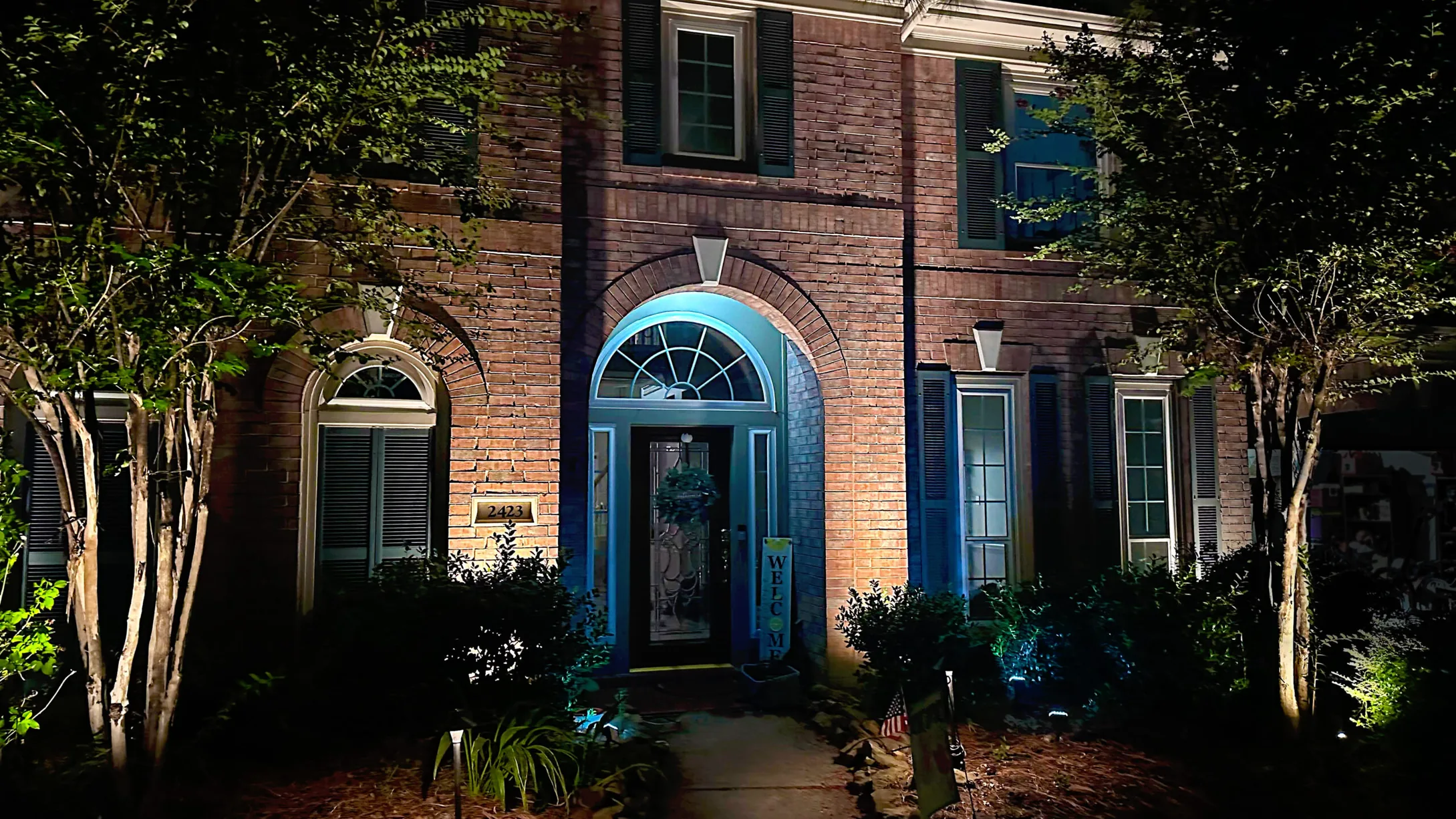
Landscape Lighting Maintenance
Cleaning, re-aiming and voltage checks — most repairs start as maintenance that never happened.
Fixtures that stopped, runs that flicker, a transformer that trips, a timer that never follows sunset. We troubleshoot the system — including systems installed by somebody else — and repair what is actually wrong.
Most calls come down to a handful of patterns, and the pattern usually tells us where to start looking.
Several fixtures failing together almost always points at something shared: a connection, a length of wire, a run, the transformer or the controls. Replacing fixtures at that point buys nothing.
We check voltage at the transformer and out at the fixtures, follow the runs, open the connections that matter and test the controls. What comes back is a list of what is wrong and what it takes to fix it — not a quote for a new system.
Low-voltage wiring fails in predictable places: connections that were never watertight, wire nicked by a shovel or an edger, runs that were too long for the load from the beginning, and cable that has worked its way to the surface over the years.
Voltage drop is the quiet version of the same problem — the far end of a long run sits below what the fixtures need, so they dim, shift colour or cut out while everything nearer the transformer looks fine.
A transformer that trips, hums or has gone dead can mean a failed unit, a short somewhere on the runs, or simply more load than it was ever sized for — often because fixtures were added to a system that had no capacity left.
We test it before condemning it. Where the unit is sound and the problem is load or wiring, replacing the transformer would have solved nothing.
Control faults look like system faults. A timer that lost its programme after a power cut, a photocell buried under new planting, an astronomical schedule that was never set for Houston, a controller that fell off the network months ago.
They are also the cheapest thing on the property to put right, which is why they get checked early.
Builder-installed systems, work by a previous contractor, a system that came with the house — it makes no difference. You do not need to know who put it in or what was used.
We evaluate what is there, say what can be saved, and are clear when the honest answer is that repairing it again is worse value than replacing a section of it.
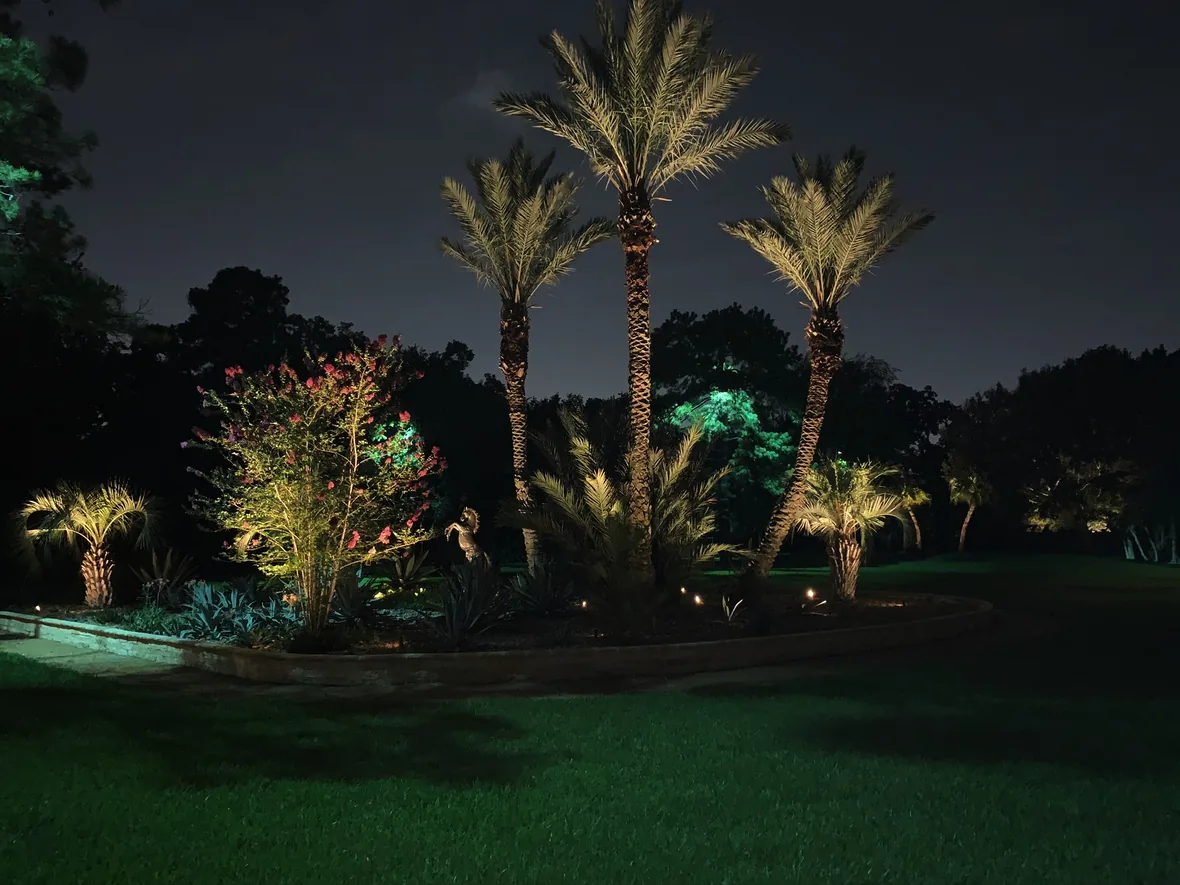
The answer comes from the condition of the parts: fixtures, wire, transformer, controls, the age of the system and whether the original design still suits the property. It is frequently a mix — repair the wiring, retrofit the fixtures that are worth keeping, replace the handful that are not.
A repair visit is also the cheapest time to fix a design problem. If three fixtures are aimed at something that stopped being interesting ten years ago, moving them costs almost nothing while we are already on the property.
Cleaning, re-aiming and voltage checks — most repairs start as maintenance that never happened.
When the halogen system fails often enough that converting it costs less than repairing it again.
The whole aftercare picture: what a service visit covers and how often a system needs one.
When the wiring, transformer and layout are past repair and a proper system is the cheaper answer.
A repair visit often reveals that the original design, not the equipment, is the problem.
Timers, photocells and controllers — the part of the system that fails most quietly.
Fixtures failing together usually means one shared cause — a connection, a run of wire, the transformer or the controls. Troubleshooting finds which before anything gets replaced.
Connections, voltage drop, damaged wire, the fixtures themselves, LED components or the transformer. The system should be tested rather than having parts swapped at random.
Yes, including builder-installed systems. You do not need to know who installed it or what equipment was used.
Yes. We inspect exposed or damaged wiring and decide whether it needs a proper watertight repair, replacement of the section, or simply reburying.
We troubleshoot the transformer and say whether it can stay in service. Often the transformer is fine and the fault is load or wiring.
Usually it is a control problem — a timer that lost its programme, a buried photocell or a schedule that never tracked sunset. It is the cheapest thing on the property to correct.
It depends on the fixtures, the wire and the transformer. Where the infrastructure is sound, converting is often cheaper over a couple of years than repeated repairs. LED Upgrades & Retrofitting
Yes, on appropriate commercial properties — the same troubleshooting on a larger system. Commercial Outdoor Lighting
One fixture or the whole system, ours or somebody else's — the first step is finding out what is actually wrong rather than replacing parts and hoping.