
Tree Lighting & Moonlighting
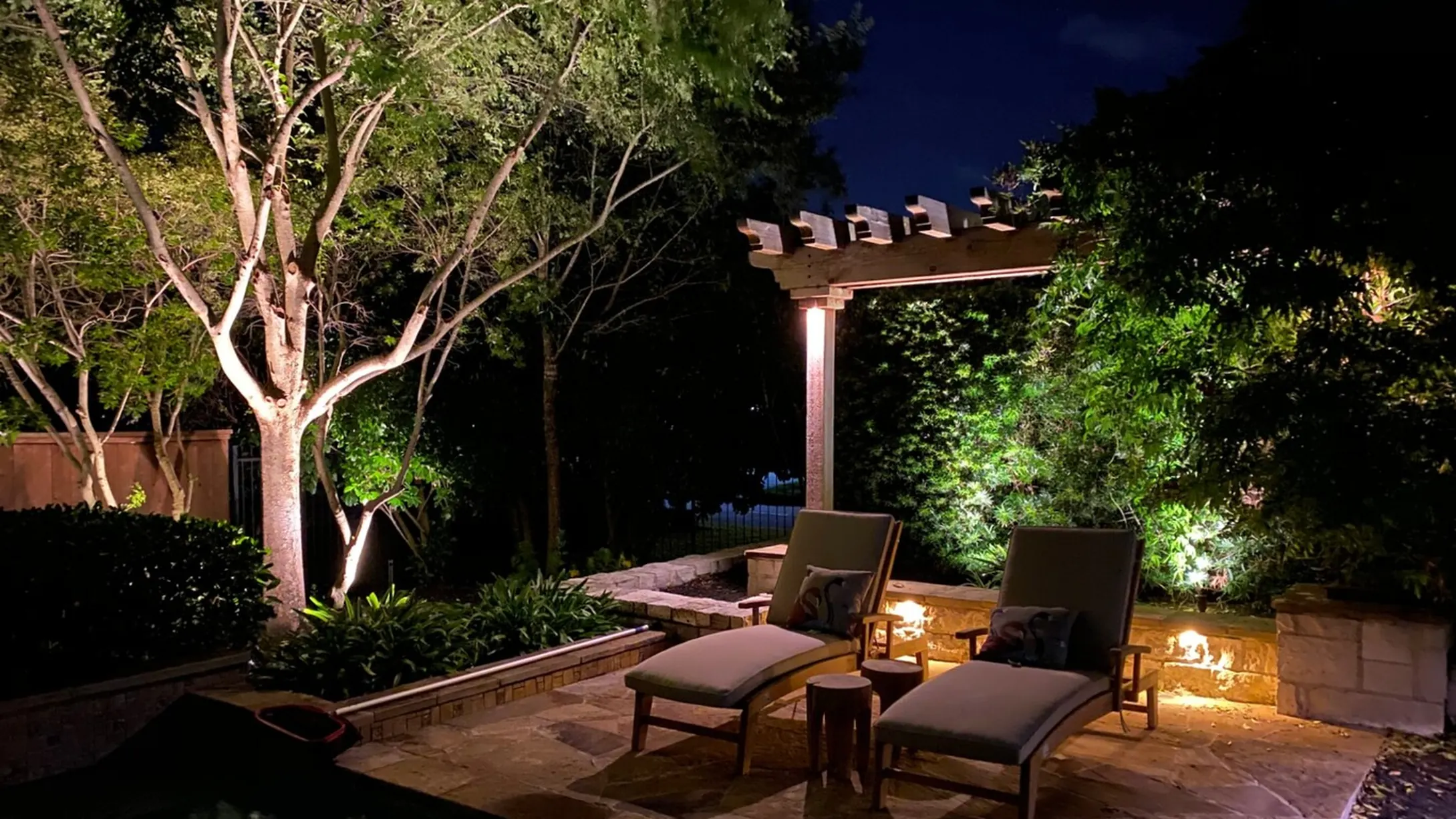
A lit canopy beyond the seating area is what gives a patio depth — and moonlight onto it.
Enough light to cook, eat and move safely — and soft light through the landscape around it, so the space feels like an outdoor room instead of a lit platform.
A patio is not something to look at. It is a place people sit, cook, eat and talk, and the lighting has to serve that before it serves the view.
Family dinners, entertaining, a quiet evening outside and a party need different amounts of light in different places. So the design starts with where people sit, where they work, where they walk, and what they look at from the chair.
A single bright source in the middle of a patio provides light and nothing else: hard shadows, glare in the eyes and everything past the edge in blackness. Several smaller sources doing different jobs produce an outdoor room.
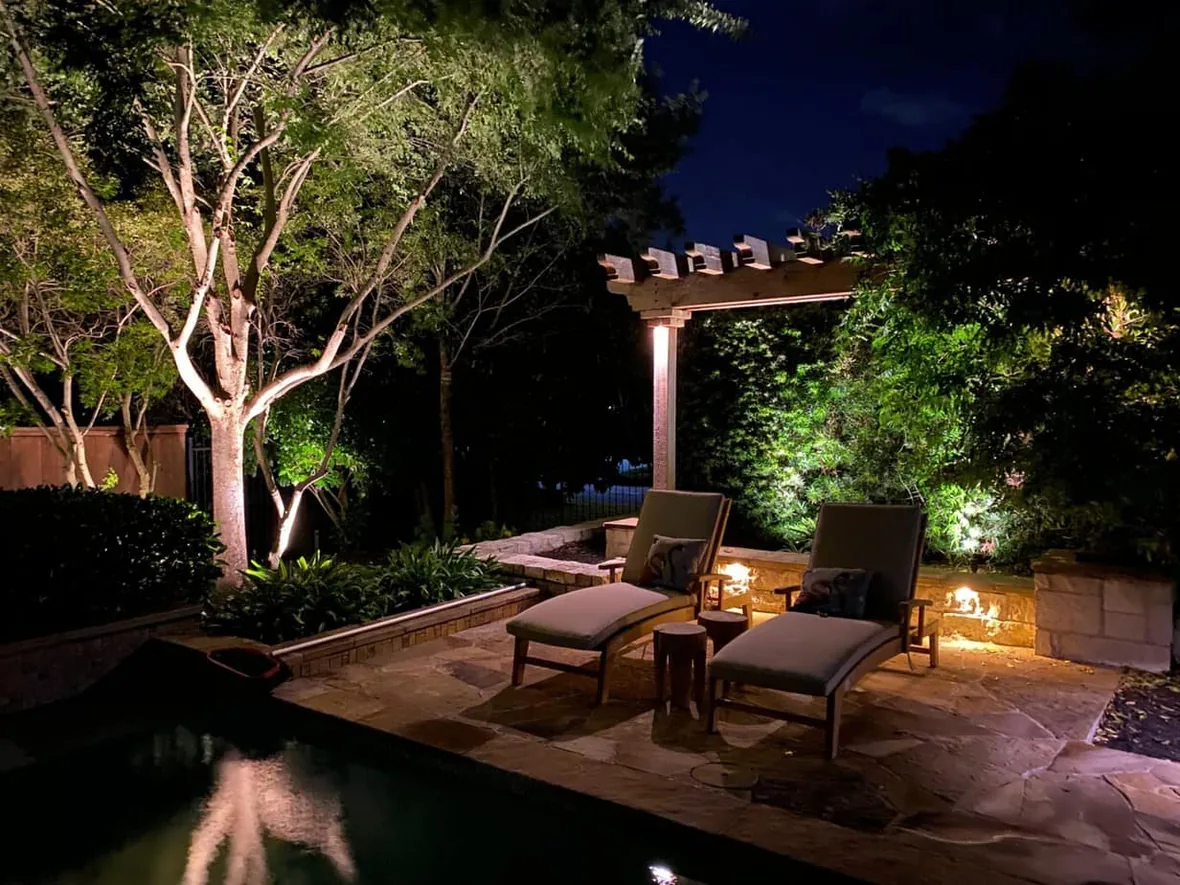
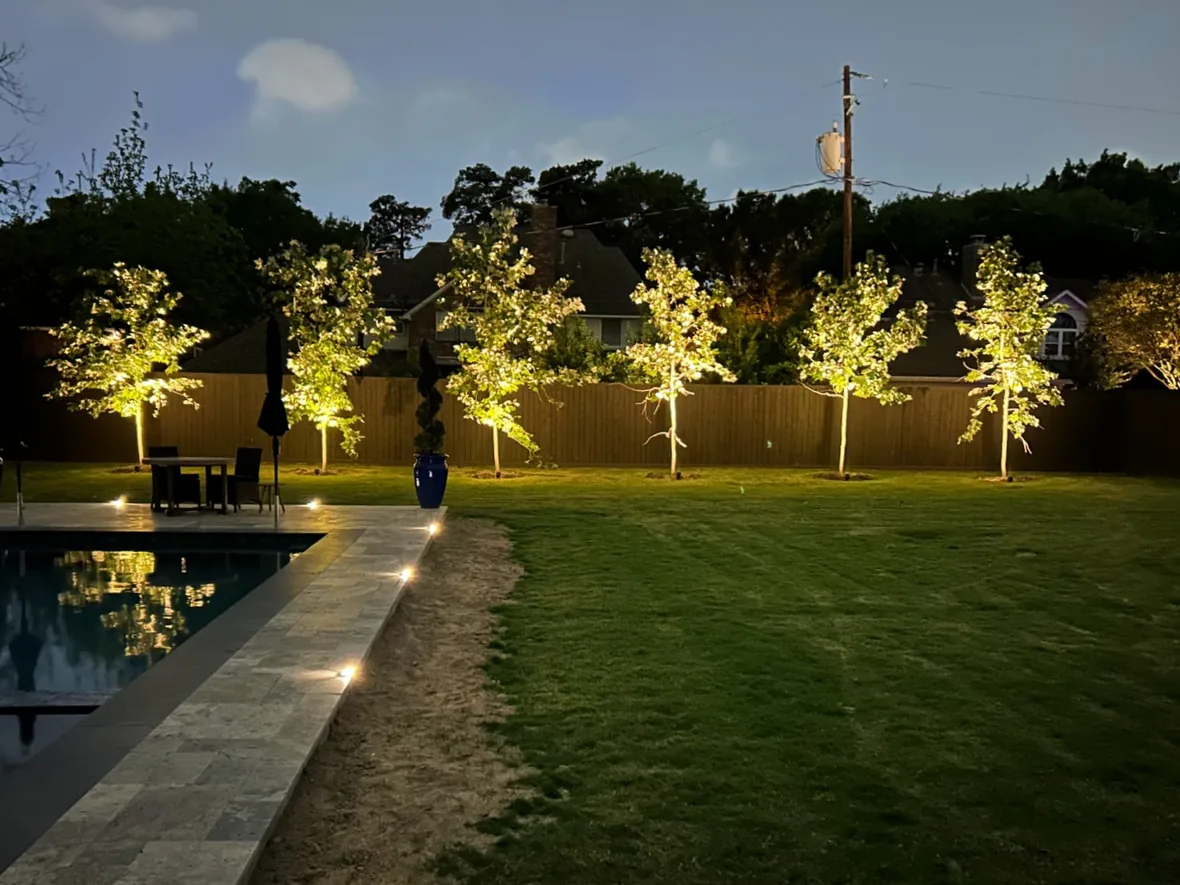
Sit outside with everything beyond the paving unlit and the space feels small and closed in. Light the planting around it, put a tree further into the yard on a low level, and the same patio suddenly has a room around it.
This is the single change that most improves an existing outdoor living area, and it usually means adding light away from the patio rather than on it.
Grills, counters, sinks and prep areas need enough light to work safely — and that light should stop at the work surface rather than turning the kitchen into the brightest object in the backyard. Shielded sources, tight beams and placement that keeps the lamp out of sightlines.
Dining and seating areas take the opposite approach: comfortable, low, indirect. Too little light and the space is unusable; too much direct light and nobody stays in it.
A pergola gives the design something to work with: downlighting from the beams, accents on the posts, and landscape light carrying through the structure so it does not read as a dark frame.
A covered patio is the harder case. Sky light never reaches it, and the obvious fix — bright overhead fixtures — turns it into an indoor room. Mixing direct and indirect light, lighting the perimeter and the landscape just outside the roofline, keeps it feeling outdoors.
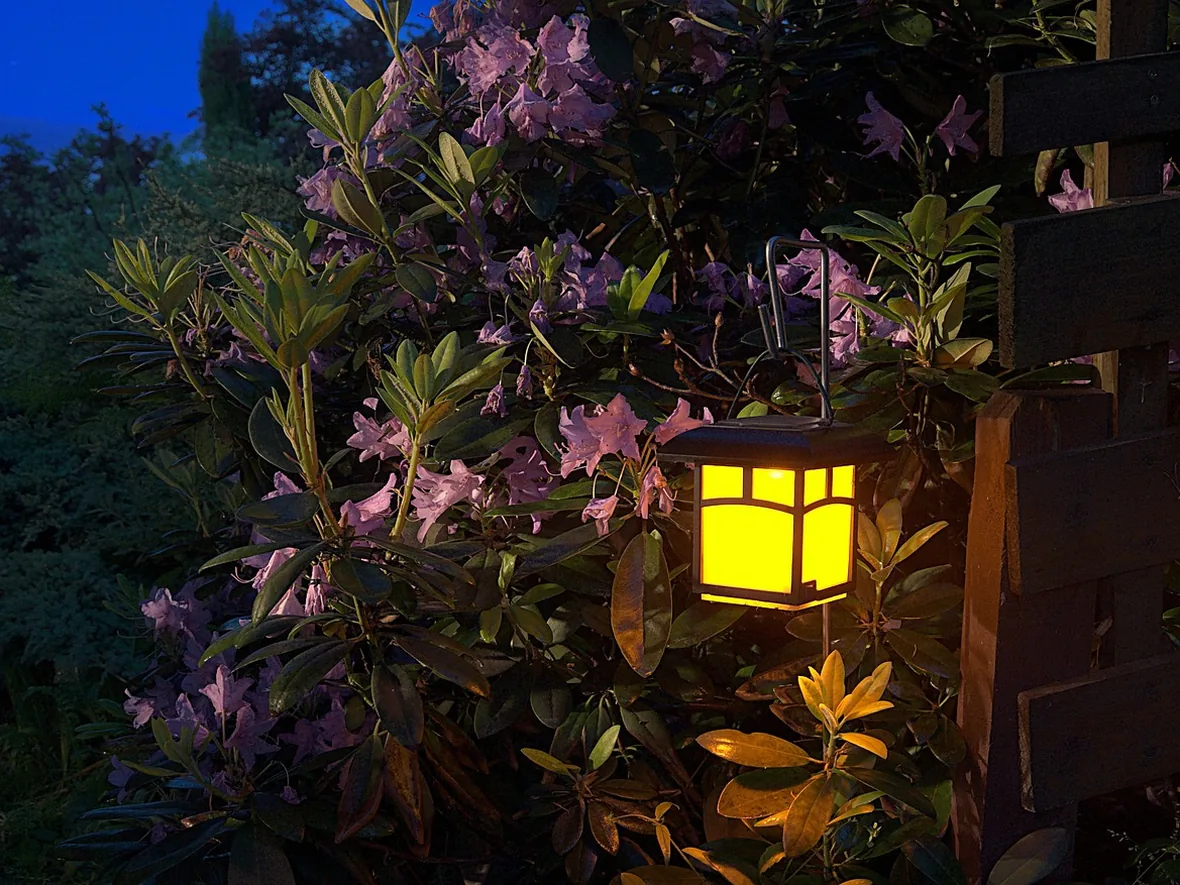
Glare that goes unnoticed from the street is intolerable at three metres, sitting down. We check the fixture positions against where people actually sit and look — including the view back toward the house — and shield, lower or move whatever shows its source.
The same fixtures can serve very different evenings if the system is zoned and dimmable: low and warm most nights, more light on the kitchen when you are cooking, and a brighter, wider setting when the yard is full of people.
Colour-changing fixtures fit here too — for holidays and events — as long as the everyday setting stays warm and natural.
If a patio, outdoor kitchen or pool is being built, bringing the lighting designer in early means sleeves, conduit and fixture positions get coordinated before the hardscape goes down — far cheaper than working around finished paving.
For an existing space, most of the work is usually adding light around the patio rather than on it, plus fixing whatever is glaring.
A lit canopy beyond the seating area is what gives a patio depth — and moonlight onto it.
Patio and pool are one space after dark; their levels have to be set together.
The rear elevation, seen from three metres away, where glare is unforgiving.
Steps, level changes and the route between the house and the seating area.
Zones and dimming: dinner, party and everyday settings from the same fixtures.
How the outdoor room connects to the rest of the property rather than sitting apart from it.
Less than most people expect, spread across several sources. Enough to move, cook and eat safely, with the surrounding landscape lit softly so the space does not feel like a lit island.
Yes. Covered spaces need a mix of direct and indirect light, plus lighting just outside the roofline, or they end up feeling like an indoor room.
Yes — downlighting from the beams, accents on the posts, and landscape light carried through the structure so it does not read as a dark frame.
They set atmosphere but rarely do the work on their own. In a complete design they sit alongside downlighting, planting light and task light rather than replacing them.
Placement, shielding and beam direction, checked from the seats themselves rather than from standing height while the system is being installed.
Yes, and it usually should be: kitchens want task light that the rest of the yard does not need. Zoning lets you run it only while you are cooking.
With zones and dimming, yes. The same fixtures carry a quiet evening and a full backyard at different settings.
Yes. Most of the improvement usually comes from adding light around the space and correcting glare, both of which can be done without touching the paving.
Tell us how you actually use the space — dinners, entertaining, quiet evenings — and the lighting gets designed around that rather than around the furniture layout.