
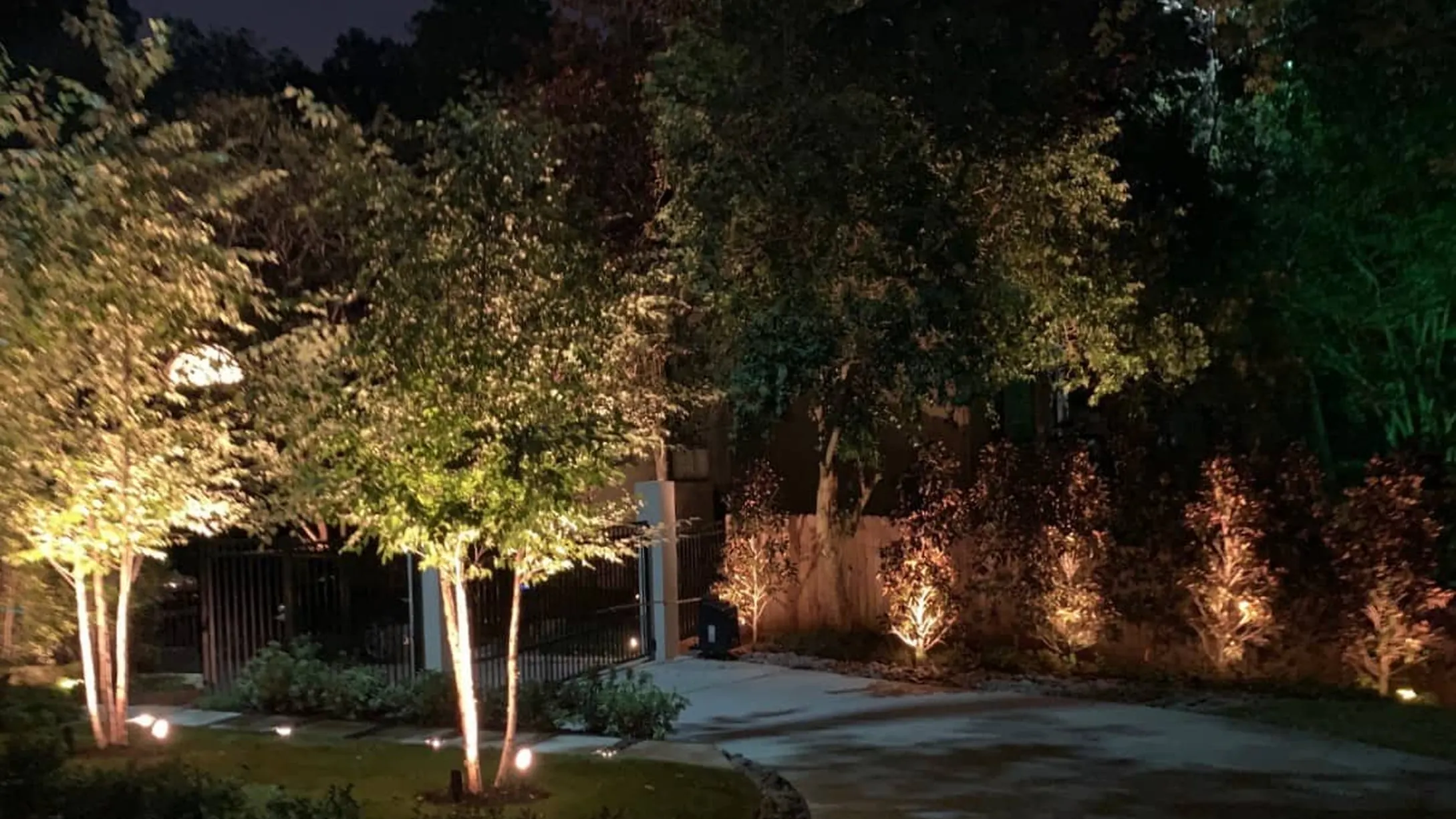
Architectural & Accent Lighting
The entrance the approach is aimed at, and the columns and walls along the way.
Walkways, steps, driveways, gates and the front entrance — lit so people can see where they are going without turning the property into a runway.
Path and entry lighting gets treated as purely practical. It does not have to be.
The same fixtures that define a walkway can pick up planting, a wall, a tree or the architecture beside it. The question is not “where do we need a light” but “what should someone see as they move through here” — and the useful light usually falls out of the answer.
Unlike an uplight buried in a bed, a path fixture is part of the daytime landscape too. Scale matters: a fixture that suits a large estate looks oversized in a small courtyard garden, and a small one disappears on a long approach.
Spacing matters more. Evenly spaced fixtures every two metres produce the runway; placing them where the route actually needs them — a turn, a step, a narrowing — and letting light from planting and trees cover the rest produces a walk.
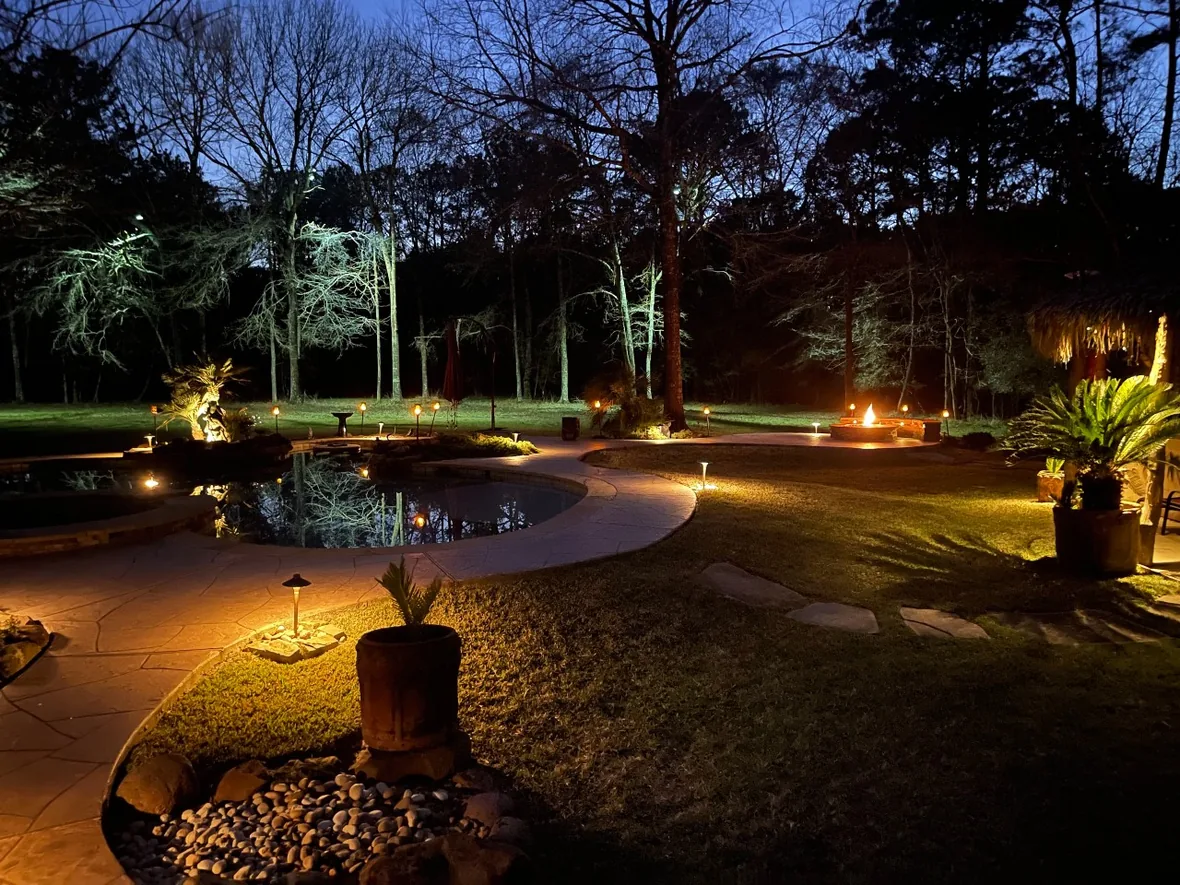
Driveways cover a lot of ground, and the instinct is to run fixtures down both sides from the street to the garage. That reads as an airstrip and flattens everything around it.
We look at the whole approach instead: the gate or entry, a tree or two along the way, the planting at the turn, the architecture at the end. Light the moments and the drive resolves itself.
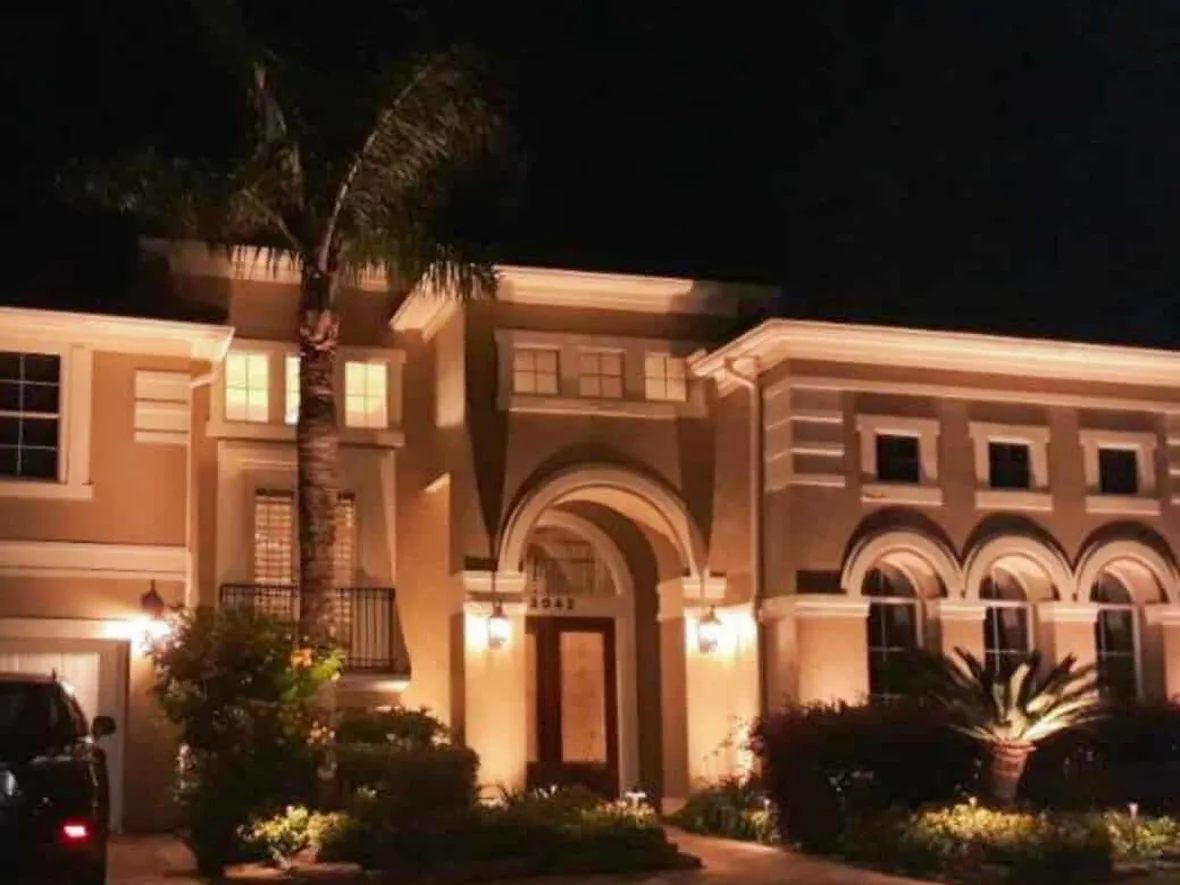
It should feel welcoming, be identifiable from the street, and sit at the top of the hierarchy — brighter than the walkway that leads to it, supported by column or architectural light rather than a single fixture over the door.
Steps are where useful light stops being optional. The fix is light on the tread, from a shielded source set into the structure or from above, so the edge reads without a lamp in the eye.
Gates and courtyard entrances work the same way: light the structure and the planting around the opening rather than aiming a fixture at the gate itself.
Two failures produce most bad path lighting: identical fixtures at identical spacing, and too much output at eye level. Both are fixable — vary the sources, drop the levels, and let moonlight from a canopy or spill from a planting bed do part of the work.
Glare deserves the same attention here as on a patio: people walk toward these fixtures, so a bare lamp aimed along the path is looked straight into.
The entrance the approach is aimed at, and the columns and walls along the way.
Moonlight through a canopy lights a walk far better than a row of path fixtures.
Where the routes sit in the plan and how they hand the eye from the street to the door.
Steps and level changes between the house and the seating area.
Wiring along a drive, fixture heights and the burial that keeps it all invisible.
Path fixtures get clipped by mowers and swallowed by planting — this is the service that finds them.
There is no fixed spacing — evenly spaced fixtures are what creates the runway look. Position them where the route needs them (turns, steps, narrow points) and let planting and tree light cover the rest.
Usually not. Lighting the entry, a few trees along the approach and the architecture at the end reads better than fixtures down both sides.
Yes — light on the tread from a shielded source in the structure or from above, so the edge is visible without a lamp in your eye.
Moonlighting from a suitable canopy covers a long run with soft light and no row of fixtures. Gate and entry lighting anchors the start of it.
They are visible fixtures, so selection and scale matter. We choose them to suit the property and place them in planting rather than stranded on a lawn edge.
Usually yes, subject to transformer capacity and the wire runs already in the ground.
They are the most exposed part of a system — mowers, string trimmers and growing planting all reach them. That is what maintenance visits are for.
Yes, with timers, photocells or smart controls and zones. Smart & Color-Changing Outdoor Lighting
The experience of a property starts at the street, not at the front door. Lighting decides how that arrival reads.