
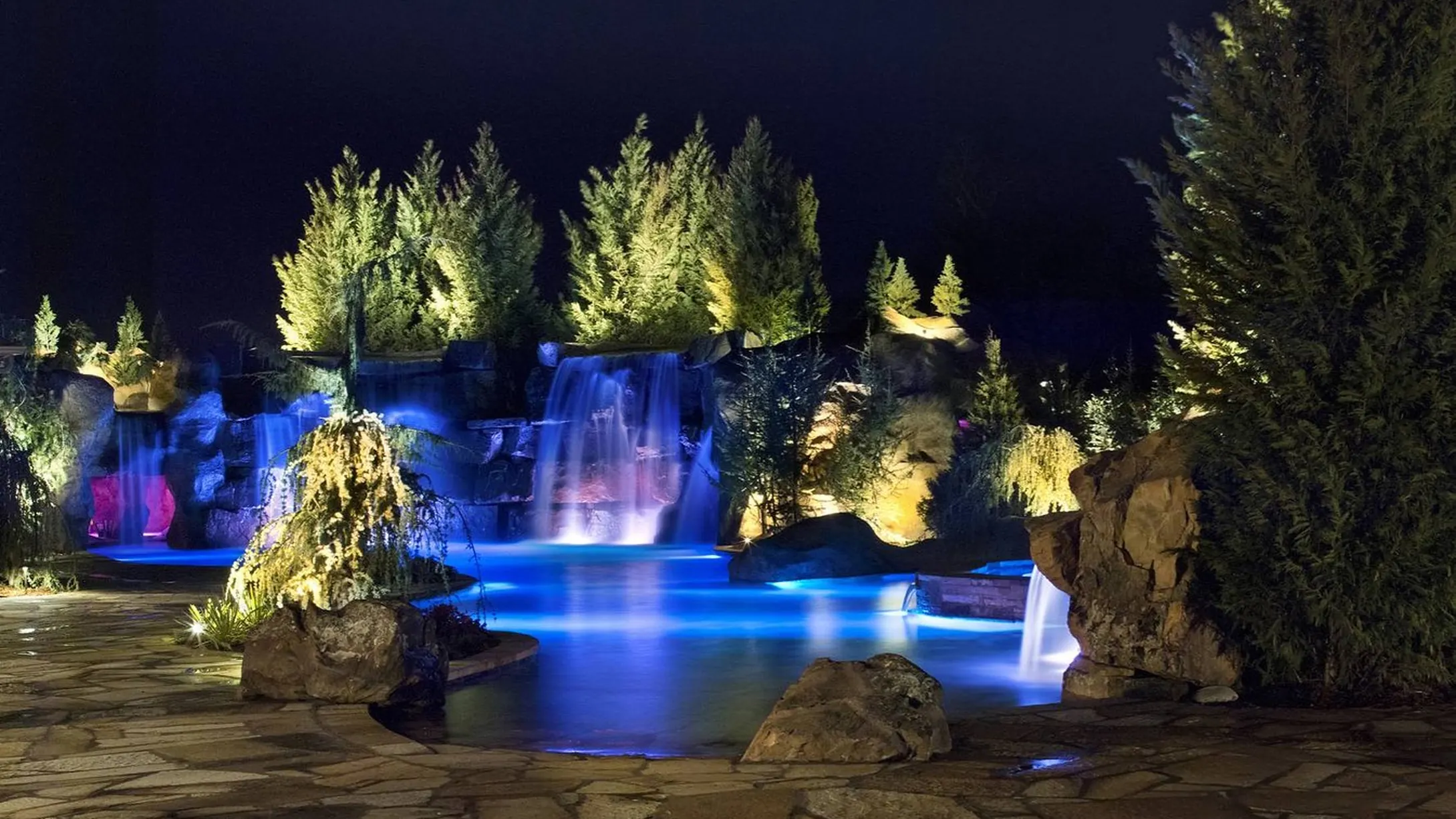
Patio & Outdoor Living Lighting
Pool and patio are one space after dark; the levels have to be decided together.
Pools, fountains, waterfalls, ponds and spas designed as part of the whole backyard — because a lit pool in a black yard is one bright object, not a nighttime view.
It sits among patios, outdoor kitchens, planting, trees, walls, decks, spas and the back of the house — and after dark all of that is either part of the view or a hole in it.
So when we talk about pool lighting we mostly mean the landscape and architectural lighting around the pool environment: trees beyond the water, planting around the deck, the walkways in, the walls and the elevation behind.
A lit tree on the far side reflects across the surface. Architectural light behind a fountain adds a second layer. Planting light around the coping is mirrored back and the backyard reads as considerably larger than it is.
That is why the strongest move around water is usually not in the water at all.
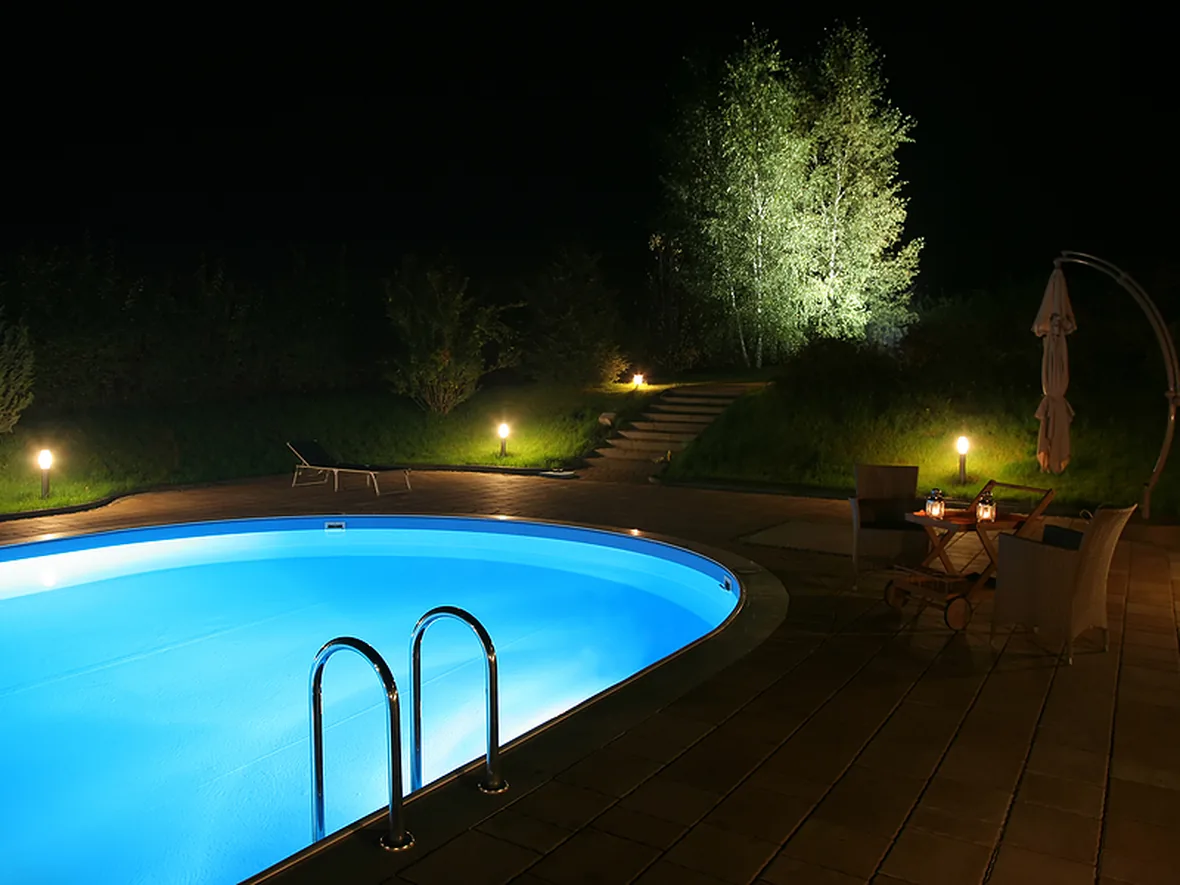
Where do you actually see the pool from at night — the patio, the outdoor kitchen, a covered porch, the kitchen window? Those positions decide what should be lit on the far side and what must stay dark so it does not glare back across the water.
A view designed from the seat is a very different result from fixtures placed evenly around a coping.
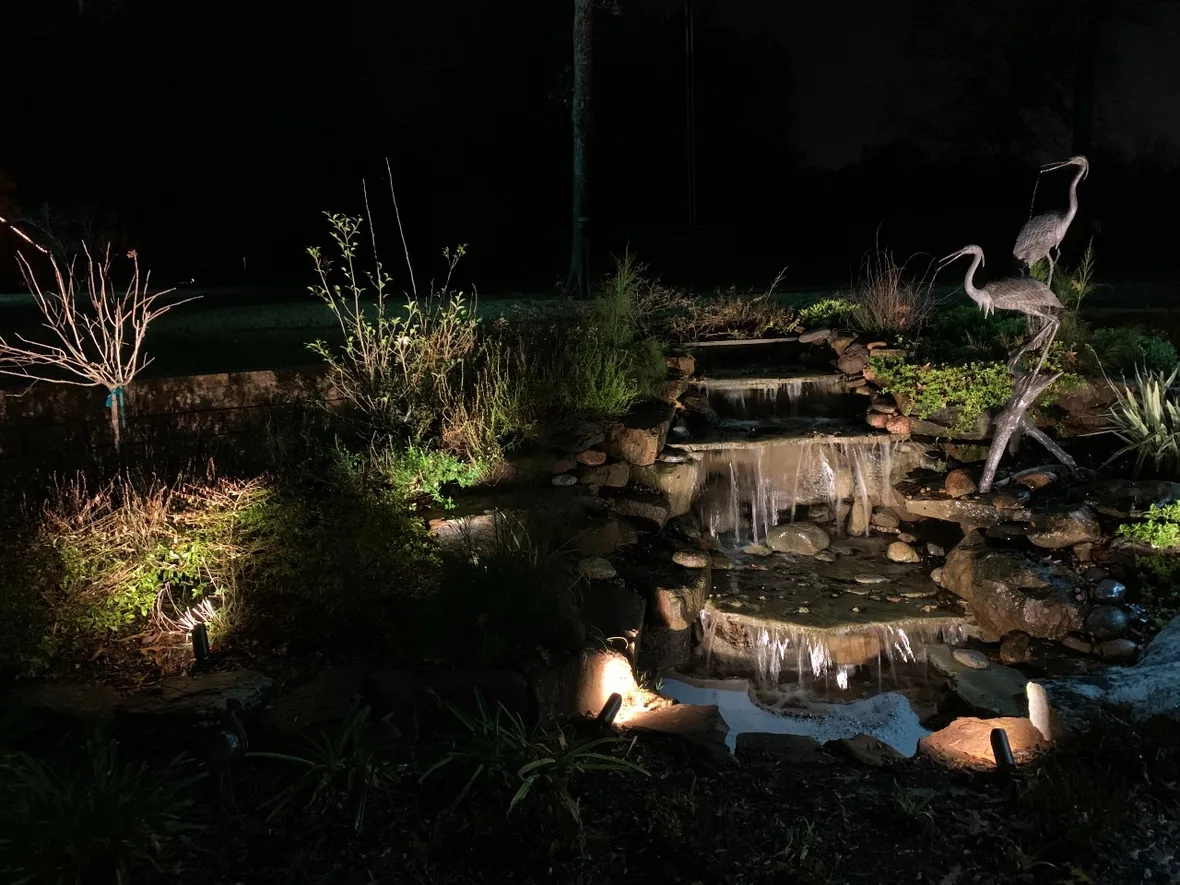
Moving water behaves differently from a still pool: a waterfall has texture worth catching from the side, a fountain reads best against something lit behind it, a pond wants its edge and its planting rather than its middle.
Spas and hot tubs are used close-up and often looked into, so output comes down and shielding goes up.
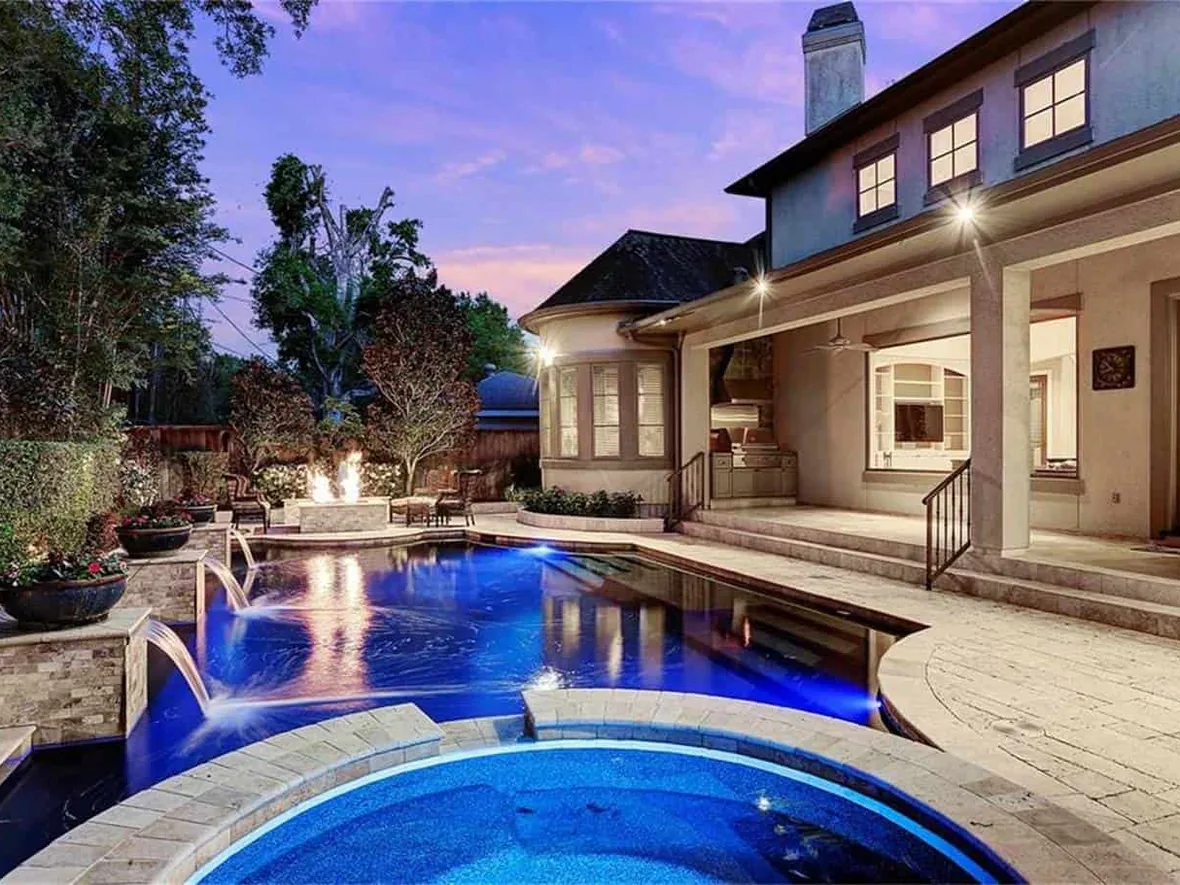
Steps, level changes, coping edges and the walkways between the house and the pool need useful light — placed so people see the surface rather than the lamp, and kept low enough not to compete with the view across the water.
A fixture that is only slightly visible from the patio becomes a bright point in the water as well. We check positions from the seats and from indoors, then shield, lower or move whatever reflects back.
The other common failure is overlighting: a pool area lit to the same level everywhere loses the reflection entirely, because there is nothing dark left for the light to sit against.
Pool and patio are one space after dark; the levels have to be decided together.
A canopy across the water doubles in the reflection — the cheapest depth on the property.
The rear elevation behind the water, and the walls a fountain sits against.
Decks, steps and the routes around water, where footing matters.
Where the water sits in the plan and what the view across it is meant to be.
Fixture placement around water, wiring routes and the equipment that belongs near a deck.
In-pool lighting is part of the pool system itself and is usually handled by the pool builder or service company. Our work is the landscape and architectural lighting around the water — which is what makes the biggest difference to the view at night.
Because water reflects. Trees, planting and architecture around the pool appear twice — once directly and once on the surface — while a pool lit alone reads as one bright object in a black yard.
Yes. Moving water takes light differently from a still surface: waterfalls read best lit across the face, fountains against something lit behind them.
The edge and the planting around it usually matter more than the water itself, and keep the feature from floating in darkness.
Not if they are positioned for it. Every fixture near water is checked from the seating positions and from indoors, because a reflection doubles anything left visible.
Yes, and it is usually straightforward: most of the work is in the surrounding planting, trees and walls rather than in the hardscape.
They should be designed together and are normally zoned separately, so the patio can run at a comfortable level while the pool view stays as you want it.
Yes, for events and holidays, as long as the everyday setting stays warm and natural. Smart & Color-Changing Outdoor Lighting
Most of the improvement around water comes from lighting everything except the water — trees, planting, walls and the architecture behind it.