
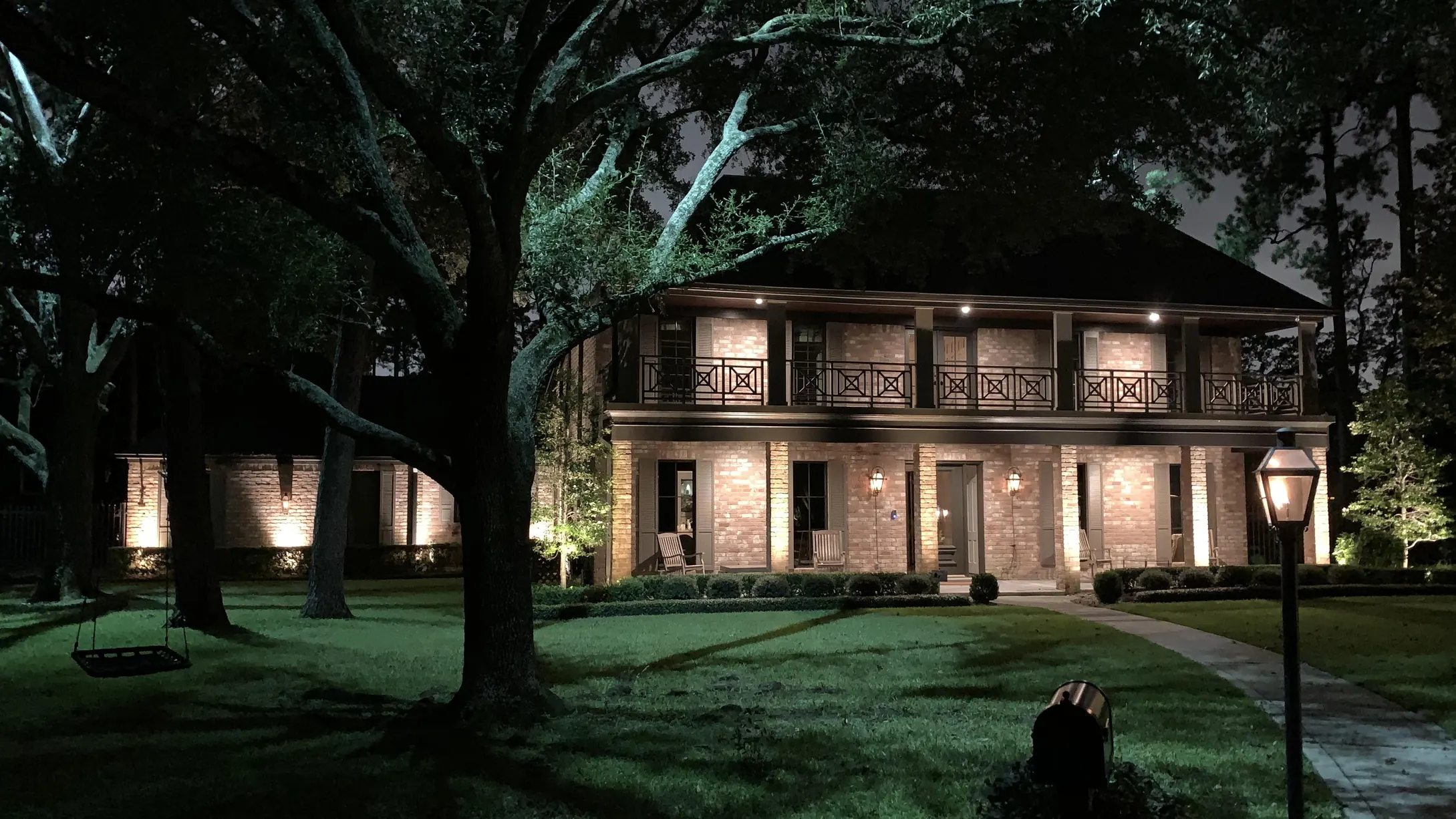
Landscape Lighting Design
The plan the installation follows: what gets light, which technique, and where each fixture sits.
Fixture placement, transformers, wiring, controls, testing and the final night-time adjustments — one team from the first stake to the last aim.
Installation is not placing lights around a yard and finding power for them.
A complete system carries fixtures and LED lamps, low-voltage wiring, connections, a transformer sized to the load, controls, and then the work that makes it disappear: routing, burial, aiming, testing and the night-time review.
We do not start by deciding where a fixture would be convenient. Before anything goes in the ground we know which features should be lit and what each fixture has to accomplish — which is why moving one light a short distance is a design decision, not a shortcut.
Placement changes beam angle, shadow, hot spots and how much of the fixture you can see from where people actually stand.
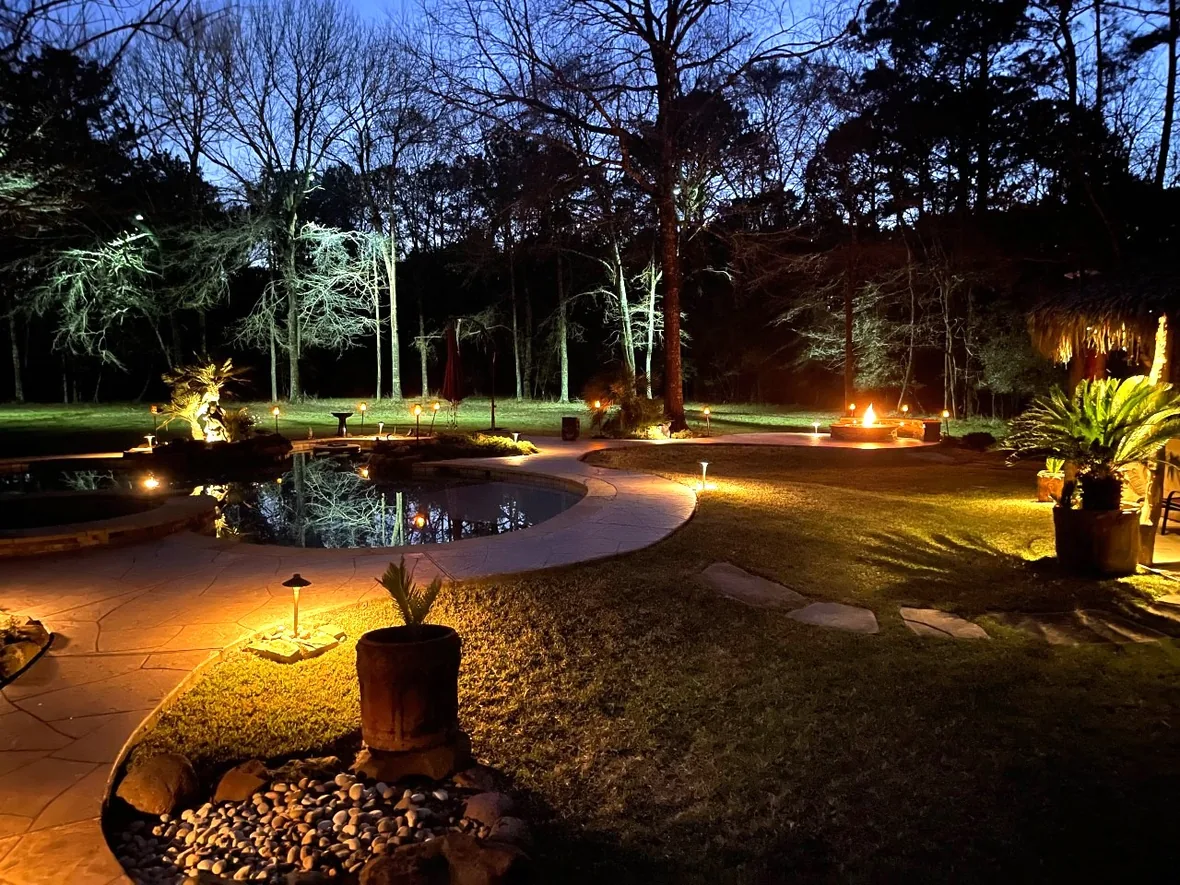
Low-voltage suits landscape work: it lets us put light anywhere on the property using equipment built for the job. Modern LED gives more freedom than the halogen systems it replaced — lower energy use, long operating life, and beam and output options that let a design stay subtle where it needs to be.
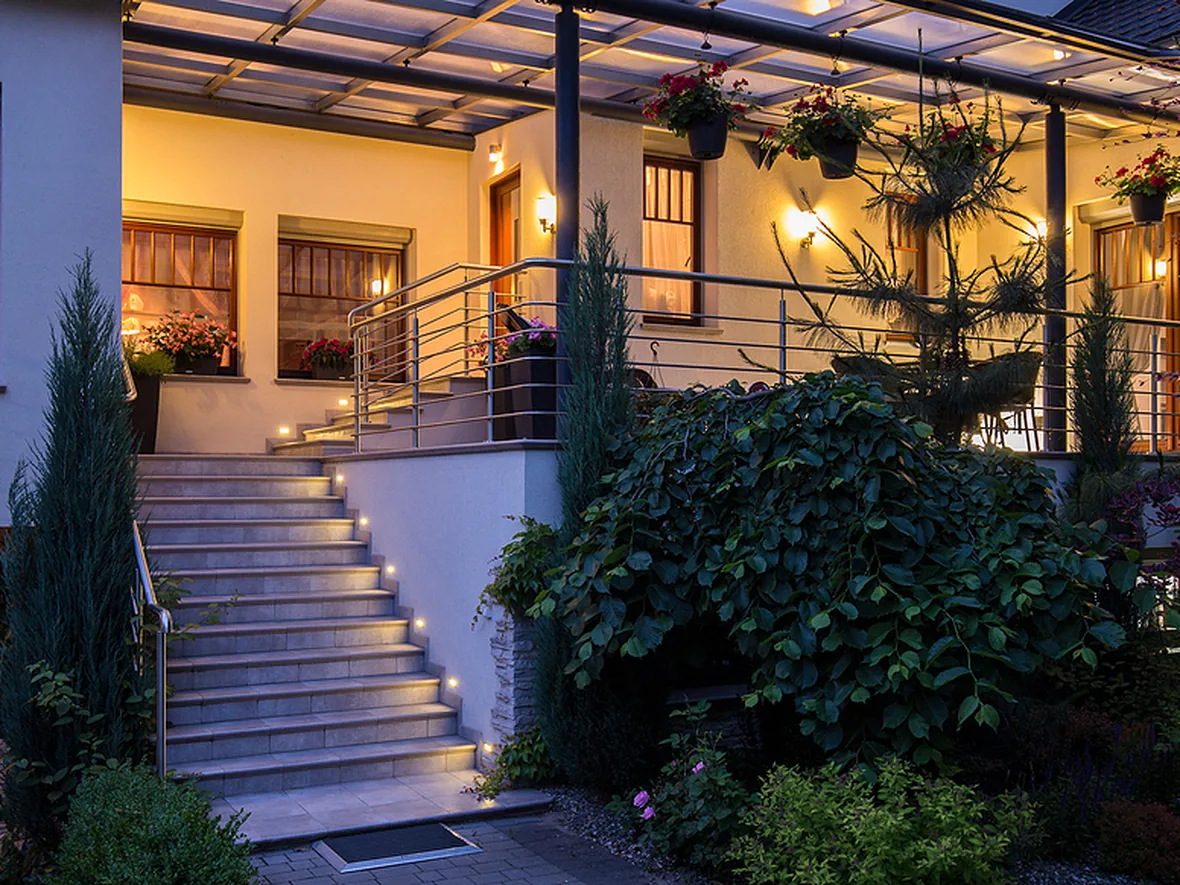
Heat, humidity, heavy rain, irrigation, soil, insects, lawn crews and year-round growth all work against outdoor equipment. We install high-quality fixtures, brass among them, chosen for long service outdoors rather than for the price on a pallet.
The transformer is selected for the system it has to carry: fixture count, load, wire runs, voltage at the far end of each run and room for the property to grow.
For typical residential installations we currently bury landscape lighting wire roughly 8 to 10 inches below ground where appropriate. Rather than opening broad trenches across an established lawn, the ground is opened narrowly, the wire goes in, and the surface is closed again.
Most of our projects are on properties with mature landscaping already in place, so crews work around established trees, shrubs, beds, irrigation and hardscape rather than through them.
A system also needs a way to decide when it runs. Timers hold a schedule, photocells bring the lighting on at dusk, and smart controls add zones, scenes, dimming and remote operation where the homeowner wants them.
Every fixture working is not the same as the system being right. We test operation, connections, voltage and controls — then come back after dark, because a fixture that looks correctly aimed at noon can throw a hot spot or a hard shadow at night.
Direction, beam placement, brightness, glare from the seating areas and the balance between one part of the property and the next all get adjusted with the system running.
Plenty of properties get done at once. Plenty do not: the front elevation and entry first, the backyard when the patio is finished, the far end of the lot when the planting fills in. The design accounts for what comes later so the transformer and wire runs are ready for it.
An existing system does not have to be torn out either. We can evaluate fixtures, wiring, transformer and controls and keep what still earns its place.
The plan the installation follows: what gets light, which technique, and where each fixture sits.
Ground-mounted uplighting, grazing and accent positions on the house itself.
Fixtures at the base of a tree, or mounted high in the canopy and aimed down.
Converting an older halogen system rather than replacing everything on the property.
Dark fixtures, water in a socket, a transformer that trips — diagnosis before parts.
Cleaning, re-aiming and adjustment once the landscape has grown past the original aim.
Professional low-voltage LED systems for residential properties: architectural and accent lighting, landscape and tree lighting, moonlighting, patio and pool-area lighting, pathway and entry lighting.
High-quality outdoor fixtures, brass among them, selected for long service in Houston conditions.
For typical residential installations, roughly 8 to 10 inches below ground where appropriate. Actual requirements depend on the location and conditions of the project.
No. The ground is opened narrowly for the wire rather than trenched across the property, and the surface is closed back up. Crews work around established trees, beds and irrigation.
Yes — the same company designs and installs, which is the point: placement is a design decision and it should not be handed to someone who was not part of it.
Often, yes. Many homeowners start with the front elevation and entry and extend into the backyard later. The design and the transformer are planned for what comes next.
Usually. We evaluate the fixtures, wiring, transformer and controls first to see what can stay in service and what should be replaced.
Yes. The night-time review is part of the job, and ongoing maintenance keeps the system aimed as the landscape grows. Landscape Lighting Maintenance
The fixtures are only part of a lighting system. The finished result depends on the design, the equipment, the wiring, the placement, the controls and the final adjustments all working together.